Stationary Bike vs Treadmill: Which Is Better?
When comparing a stationary bike vs. treadmill, neither is definitively “better” for everyone. The best choice depends entirely on your personal fitness goals and physical needs. Treadmills excel at high-impact cardio and calorie burn, while stationary bikes offer a low-impact workout that’s easier on your joints.
Choosing between these two popular machines can feel like a tough decision. Both can help you burn calories and improve cardiovascular health. However, understanding their unique benefits will help you pick the one that fits your routine. We found that treadmills are great for runners, while bikes are ideal for those seeking a gentler option.
- Treadmills are best for running and higher calorie burn.
- Stationary bikes offer a low-impact cardio workout.
- Consider your joint health when choosing.
- Your specific fitness goals matter most.
Let’s break down the key differences and help you decide which machine will be your workout best friend.
“`htmlTreadmill vs. Stationary Bike: Making the Right Choice for You
Choosing between a treadmill and a stationary bike is a big decision for your fitness journey. Both offer fantastic cardiovascular benefits. We found that the best machine for you truly depends on your personal goals and physical condition.
Understanding the Treadmill: Your Running Companion
A treadmill is a fantastic tool for simulating outdoor running or walking. You can control the speed and incline, making it adaptable to various fitness levels. It’s a great way to get your heart rate up and burn calories.
Calorie Burn Potential
When it comes to calorie burn, treadmills often have an edge. Running or jogging on a treadmill can burn more calories in the same amount of time compared to cycling. This is due to the engaging of more muscle groups and the higher intensity often involved. Many studies have shown that higher intensity workouts, like running, lead to greater calorie expenditure (National Institutes of Health).
Impact on Joints
One of the main considerations with treadmills is the impact on your joints. Running is a high-impact activity. Each step sends shockwaves through your ankles, knees, and hips. If you have joint pain or are prone to injuries, this could be a concern. However, walking on a treadmill is generally lower impact than running.
Versatility of Workouts
Treadmills offer a wide range of workout possibilities. You can simply walk, jog, or sprint. The incline feature allows you to simulate hills, which adds a challenge and works different leg muscles. You can create interval training sessions by varying speed and incline. This versatility keeps workouts interesting and effective.
Exploring the Stationary Bike: A Gentler Ride
A stationary bike provides a smooth, consistent workout. It’s known for being gentle on your joints. This makes it an excellent option for many people, especially those recovering from injuries or managing joint issues.
Low-Impact Cardio
The primary advantage of a stationary bike is its low-impact nature. Your feet are attached to the pedals, so there’s no jarring. This reduces stress on your knees and hips. For individuals with arthritis or those who find running uncomfortable, cycling is a wonderful alternative for cardiovascular exercise (Mayo Clinic).
Muscle Engagement and Strength
While cycling might not burn as many calories as intense running, it’s still a powerful workout. It primarily targets your leg muscles: quads, hamstrings, and glutes. Many bikes also have adjustable resistance, allowing you to increase the intensity and build leg strength. Some routines focus on high-resistance intervals to mimic hill climbs, engaging your muscles even more.
Types of Stationary Bikes
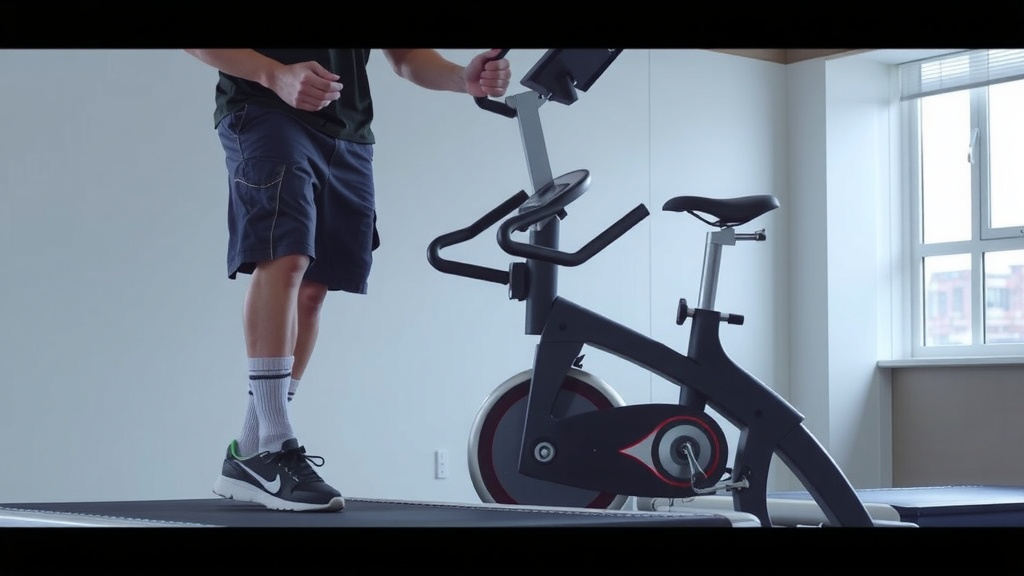
You’ll find a few main types of stationary bikes. The upright bike is like a regular bicycle. The recumbent bike has a larger seat with back support, which is even more comfortable and easier on the back. Then there are spin bikes, designed for more intense, dynamic workouts similar to those in a spin class.
Comparing Key Factors: Which Fits Your Needs?
Let’s put them side-by-side to help you visualize the differences. Think about what matters most to you and your fitness plan.
| Feature | Treadmill | Stationary Bike |
|---|---|---|
| Impact Level | High (running), Moderate (walking) | Low |
| Calorie Burn | Potentially Higher (especially with running/incline) | Moderate to High (depending on intensity) |
| Joint Friendliness | Can be hard on joints | Very joint-friendly |
| Muscle Focus | Full body (legs, core, arms if swinging) | Primarily lower body (legs, glutes) |
| Workout Variety | Walking, running, incline training | Cycling, resistance training |
Who Should Choose a Treadmill?
A treadmill is often the go-to for those who love to run or walk. If your goal is to simulate outdoor running conditions or achieve a high calorie burn through intense cardio, a treadmill is excellent. It’s also great for training for races like 5Ks or marathons. If you don’t have joint issues, it’s a solid choice.
Who Should Choose a Stationary Bike?
If you’re looking for a workout that’s easy on your joints, a stationary bike is likely your best bet. People with knee pain, hip problems, or who are overweight often find cycling much more comfortable. It’s also ideal if you want to improve leg strength and endurance without the impact. Many find it easier to maintain longer workouts on a bike.
Your Personal Checklist for Decision Making
To make your final choice, ask yourself these quick questions:
- Do you have any existing joint pain?
- What are your primary fitness goals (weight loss, endurance, strength)?
- Do you enjoy running or do you prefer a seated workout?
- How important is simulating outdoor exercise for you?
- Are you prone to injuries?
- What level of intensity are you aiming for?
Conclusion
When deciding between a stationary bike and a treadmill, remember your personal fitness goals are the ultimate guide. Treadmills offer a high-impact cardio option, excellent for calorie burn and simulating outdoor running, but can be tough on joints. Stationary bikes provide a low-impact workout, ideal for joint health and building lower body strength with less stress. We found that your comfort, any existing injuries, and what type of exercise you enjoy most should steer your decision. Consider your needs, and pick the machine that you’ll use consistently to reach your health objectives.
Frequently Asked Questions
Can I get a full-body workout on a stationary bike?
While stationary bikes primarily target your lower body, you can engage your core by maintaining good posture. Some advanced routines and spin bikes encourage upper body engagement through arm movements. However, for a comprehensive full-body workout, treadmills often have a slight edge due to the natural arm swing involved in running.
Is a treadmill better for weight loss than a stationary bike?
Both machines are effective for weight loss when used consistently. Treadmills can potentially burn more calories per session, especially when running at high speeds or using incline. However, if you find you can work out longer and more intensely on a stationary bike due to joint comfort, it can also lead to significant calorie expenditure and weight loss.
Which machine is better for someone recovering from a knee injury?
For individuals recovering from a knee injury, a stationary bike is generally the preferred choice. Its low-impact nature significantly reduces stress on the knee joints. Always consult with your doctor or physical therapist before starting any new exercise program after an injury.
Do spin bikes offer a different experience than standard stationary bikes?
Yes, spin bikes are designed for more intense and dynamic workouts, often mimicking outdoor cycling. They typically feature heavier flywheels for smoother pedaling and greater resistance adjustment. Standard upright or recumbent bikes usually offer a more relaxed, steady-state cardio experience.
How can I make my treadmill workout more challenging without high impact?
You can increase the challenge on a treadmill by focusing on incline. Walking or jogging at a higher incline engages your glutes and hamstrings more intensely without increasing the impact on your joints. Varying your speed for interval training can also boost intensity and calorie burn.