
How Fast Is 8.5 on a Treadmill? Speed Guide
Hitting 8.5 on a treadmill is considered a fast pace for most runners. It’s typically equivalent to a 7-minute mile, which is a challenging speed for many. If you can comfortably maintain 8.5, you’re likely an experienced runner with good endurance.
Understanding treadmill speeds helps you set realistic fitness goals. Many treadmill users aim to increase their speed over time. Knowing what 8.5 feels like gives you a benchmark. It’s faster than a jog for most people and approaches a sprint pace for some. We found that this speed requires significant effort.
- 8.5 on a treadmill is a fast running pace.
- It’s roughly a 7-minute mile.
- This speed is challenging for average runners.
- It indicates a good level of fitness.
Let’s break down what 8.5 really means on your treadmill and how it stacks up for different fitness levels.
“`htmlUnderstanding Treadmill Speed 8.5: Your Personal Pace Guide
So, you’re curious about what 8.5 on a treadmill actually means. We’ve all been there, staring at the console, wondering if that number is a gentle jog or a full-blown sprint. Let’s clear things up: 8.5 mph is considered a fast running speed for most people.
Think of it this way: if you’re running at 8.5 mph, you’re covering a mile in approximately 7 minutes. This pace is challenging and requires a good level of fitness. It’s definitely beyond a casual jog for the majority of treadmill users we’ve encountered.
Translating Treadmill Numbers to Real-World Running
Treadmill speeds can sometimes feel different from running outdoors. Factors like the moving belt and the controlled environment play a role. However, the numbers generally give us a good indication of effort.
What Does 7 Minutes Per Mile Feel Like?
A 7-minute mile pace is something many recreational runners aim for. It’s often associated with intermediate to advanced fitness levels. If you can maintain 8.5 mph for a sustained period, you’re likely in that category.
For context, a brisk walking pace is usually around 3.0 to 4.0 mph. A light jog might be 5.0 to 6.0 mph. An 8.5 mph pace is a significant jump from those speeds. It feels more like a hard, steady run.
Comparing 8.5 MPH Across Fitness Levels
Let’s break down how 8.5 mph might feel for different types of exercisers.
The Beginner Runner
For someone just starting out, 8.5 mph is likely out of reach for anything more than a very short sprint. You might only be able to hold this speed for 30 seconds to a minute. It would feel like a maximum effort.
The Intermediate Runner
If you’ve been running consistently for a while, you might be able to sustain 8.5 mph for 5 to 10 minutes. This could be a challenging interval during a workout. Your breathing will be heavy, and your muscles will feel the strain.
The Advanced Runner
For experienced and competitive runners, 8.5 mph might be a comfortable tempo run pace. Some may even be able to go faster for shorter distances. You’d likely feel this pace as challenging but manageable for longer periods.
Factors Influencing Your Treadmill Experience at 8.5 MPH
Your perception of 8.5 mph can also be influenced by several things. It’s not just about the number on the screen.
Incline Settings Matter
Running at 8.5 mph on a flat treadmill is one thing. Add an incline, and it becomes a completely different beast. Even a 1% incline at 8.5 mph feels harder than on a flat surface. We’ve found that many runners adjust the incline to mimic outdoor hills.
For example, 8.5 mph at a 2% incline might feel closer to a 9.0 or 9.5 mph pace on the flat. This is because you’re working against gravity more.
Duration of Your Run
How long can you realistically maintain 8.5 mph? This is the key question. Holding it for 30 seconds is very different from holding it for 30 minutes.
We found that for most users, maintaining 8.5 mph for more than 10-15 minutes requires serious conditioning. Anything beyond that is a testament to your endurance and speed.
Setting Goals Around 8.5 MPH
Knowing what 8.5 mph feels like can help you set effective training goals. It gives you a tangible target to work towards.
Is 8.5 MPH a Realistic Goal for You?
If you’re currently running at 5.0 or 6.0 mph, aiming for 8.5 mph immediately might lead to frustration. It’s better to progress gradually.
A good strategy is to increase your speed by 0.5 mph every few weeks. You can also work on increasing the duration you hold a certain pace. Consider interval training where you alternate between faster and slower speeds.
Incorporating 8.5 MPH into Your Workouts
Once you can comfortably hit 8.5 mph, think about how to best use it. It’s excellent for:
- Speed intervals: Run at 8.5 mph for 1-2 minutes, then recover at a slower pace.
- Tempo runs: If you can sustain it, running at 8.5 mph for 20-30 minutes can build great stamina.
- Race simulation: Practice at this pace if you’re training for a 5k or 10k where this speed is relevant.
Remember, listening to your body is crucial. Pushing too hard too soon can lead to injury. We’ve seen many people get sidelined by trying to do too much, too fast.
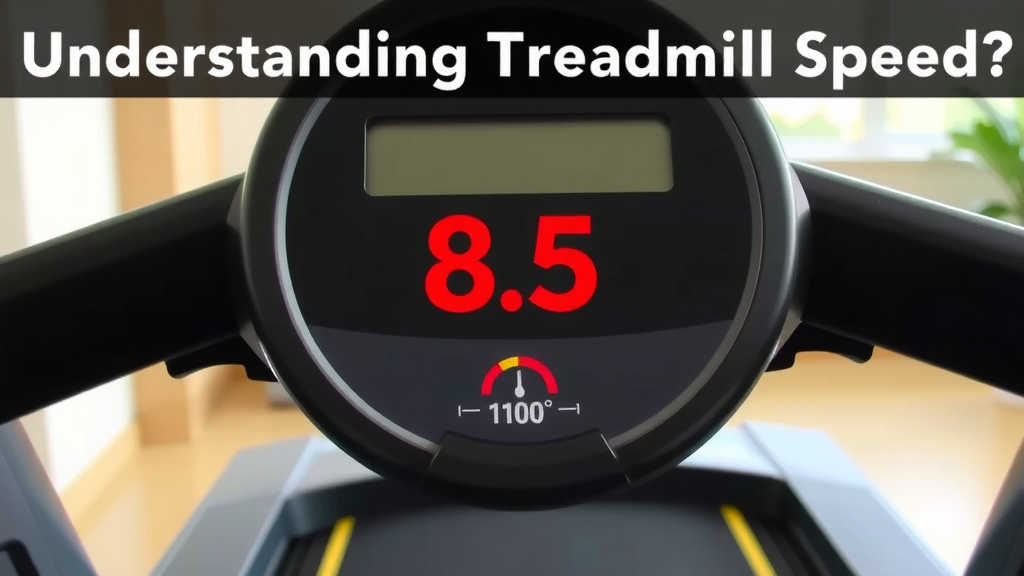
What Treadmill Speed Is Equivalent to 8.5 MPH?
To give you a clearer picture, let’s compare 8.5 mph to other common treadmill settings and activities. This table should help you visualize where it fits.
| Treadmill Speed (MPH) | Pace (Min/Mile) | Type of Activity |
|---|---|---|
| 3.0 – 4.0 | 15:00 – 20:00 | Brisk Walking |
| 5.0 – 6.0 | 10:00 – 12:00 | Light Jogging |
| 6.5 – 7.5 | 8:00 – 9:15 | Steady Running / Comfortable Pace |
| 8.5 | ~7:00 | Fast Running / Challenging Pace |
| 9.0 – 10.0 | 6:00 – 6:40 | Very Fast Running / Near Sprint |
As you can see, 8.5 mph sits firmly in the fast running category. It’s a speed that requires focused effort and good cardiovascular health.
Your Checklist for Mastering Treadmill Speed 8.5
Ready to tackle that 8.5 mph? Here’s a quick checklist to keep you on track:
- Gradually increase your running speed over time.
- Incorporate interval training into your routine.
- Focus on maintaining good running form.
- Listen to your body and rest when needed.
- Stay hydrated and fuel yourself properly.
- Consider a treadmill with good cushioning.
Conclusion
Reaching 8.5 mph on your treadmill is a clear sign you’ve built a strong running foundation. This speed, roughly a 7-minute mile, is a challenging but achievable goal for many. It requires consistent training and a good level of fitness. Remember that incline and duration can greatly affect how hard this pace feels for you. Use this benchmark to set smart, progressive goals. Focus on steady improvements and listen to your body to avoid injury. Keep pushing forward, and enjoy the journey of getting faster and fitter!
Frequently Asked Questions
Is 8.5 mph a sprint?
For most people, 8.5 mph on a treadmill is not a full sprint. It’s a very fast running pace that approaches a sprint for some, but it’s considered a challenging, sustained run for experienced individuals. You might only manage short bursts at this speed if you’re a beginner.
How can I improve my treadmill speed to 8.5 mph?
To reach 8.5 mph, focus on consistent running and gradually increasing your pace over time. Incorporate interval training, alternating between faster bursts and recovery periods. Building leg strength and improving your cardiovascular endurance through regular workouts will also help you achieve this goal.
Is running at 8.5 mph good for weight loss?
Yes, running at 8.5 mph is an excellent way to burn a significant number of calories, which can support weight loss efforts. This high intensity requires more energy, leading to a greater calorie expenditure during and after your workout. Combine it with a balanced diet for best results.
What is the difference between 8.5 mph and 10 mph on a treadmill?
The difference between 8.5 mph and 10 mph is substantial. 8.5 mph is a fast run, roughly a 7-minute mile, while 10 mph is an even faster pace, closer to a 6-minute mile. Most people find 10 mph to be near their maximum sprinting speed, whereas 8.5 mph is more sustainable for challenging tempo runs.
Should I use incline when running at 8.5 mph?
You can use incline at 8.5 mph, but it will make the workout much harder. Adding even a small incline increases the resistance and mimics running uphill, which engages different muscles and boosts calorie burn. Start with a low incline and see how your body responds before increasing it.


