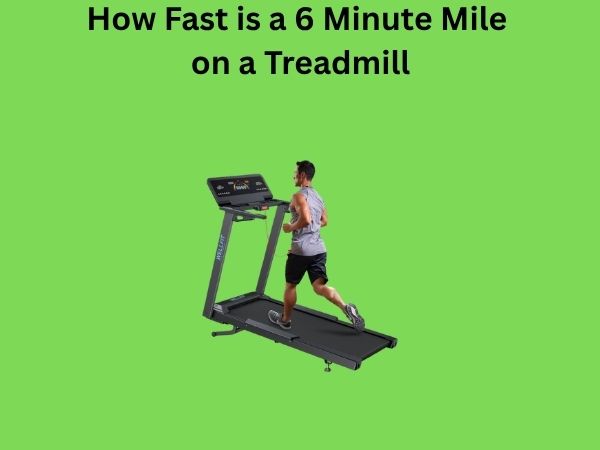
Running the Perfect 6: How Fast is a 6 Minute Mile on a Treadmill?
Have you ever wondered what it actually takes to run a 6 minute mile? Maybe you’ve seen runners blazing past you on the treadmill and thought, “How do they move that fast?” Well, I’m here to break down exactly what a 6 minute mile means, how fast you need to go on your treadmill to achieve it, and what it takes to get there. Whether you’re a seasoned runner or just starting your fitness journey, understanding this benchmark can really help you set meaningful goals.
What Exactly Is a 6 Minute Mile?
Let me start with the basics. A 6 minute mile simply means you’re covering one mile of distance in exactly 6 minutes. It sounds straightforward, right? But when you break it down, you’re talking about moving pretty quickly for a sustained period. This pace has become somewhat of a golden standard in the running world—not elite-level, but definitely respectable. It’s the kind of pace that gets people’s attention at the gym and makes you feel genuinely accomplished when you hit it.
Think of it this way: if you’re running a 6 minute mile, you’re covering about 10 miles every hour. That’s faster than most people jog, but it’s not quite sprinting. It’s that sweet spot where you’re pushing yourself hard but still able to maintain the effort for longer distances.
The Exact Treadmill Speed for a 6 Minute Mile
Here’s the straightforward answer you’re looking for: to run a 6 minute mile on a treadmill, you need to set your speed to 10 miles per hour (mph). That’s it. Simple math—60 minutes divided by 6 equals 10 miles per hour.
However, I want to make sure you understand something important. When your treadmill displays 10 mph, that’s the speed you’re actually achieving. There’s no magic conversion or hidden formula here. You punch in 10 mph, hit start, and you’re literally running at the pace needed for a 6 minute mile.
Why This Number Matters
The 10 mph mark is significant for a lot of reasons. For many beginner to intermediate runners, this is the first serious speed benchmark. It separates the casual joggers from the people who are genuinely training with purpose. When you can consistently hit 10 mph, you’ve proven to yourself that you have real cardiovascular fitness and muscular endurance.
But here’s something to consider: just because the math works out to 10 mph doesn’t mean you should jump on a treadmill today and expect to nail it. If you’re not currently running at that speed, there’s a proper way to build up to it without destroying your knees, ankles, or motivation.
Understanding Treadmill Speed Versus Road Running
Now, I need to tell you something that might surprise you. Running a 6 minute mile on a treadmill is actually slightly easier than running it on the road. I know, that sounds counterintuitive, doesn’t it?
Here’s why: treadmill running is more forgiving on your body in several ways. The belt moves beneath your feet, which means you’re not pushing off quite as hard as you would on pavement. You also don’t have to deal with wind resistance, uneven terrain, or the mental challenge of staring at a finish line that seems impossibly far away. The treadmill creates a controlled environment where physics works slightly in your favor.
The Treadmill Advantage
Most running coaches agree that a treadmill workout feels about 1 to 2 percent easier than the equivalent effort on the road. Some runners suggest adding a slight incline—typically 1 to 2 percent—to make treadmill running more comparable to outdoor running. If you’re training specifically for road races, this incline adjustment is something to keep in mind.
Real World Conditions
When you transition from treadmill to road, you’ll encounter:
- Wind resistance that works against your forward motion
- Varied terrain that requires more stabilizer muscles
- Longer distances that feel more mentally taxing
- Impact forces that are greater without the belt’s assistance
- The need to navigate turns and obstacles
All of these factors combine to make outdoor running genuinely harder than the treadmill equivalent. So if 10 mph on the treadmill feels manageable, expect road running at the same pace to feel more challenging initially.
Building Your Speed: Progressive Training Tips
So you want to hit that 6 minute mile? Great! But you need a plan. Jumping straight to 10 mph when you’re currently running at 7 mph is a one-way ticket to burnout city, and nobody wants that.
Start With Your Current Baseline
First, honestly assess where you are right now. Can you comfortably run for 20 to 30 minutes at your current pace? If not, that’s your starting point. Don’t feel bad about this—everyone starts somewhere. I remember when 6 mph felt incredibly fast. The fact that you’re working toward this goal shows real determination.
Once you’ve established your comfortable pace, you want to think about gradual increases. A good rule of thumb is increasing your speed by about 0.1 to 0.2 mph every week or two, depending on how your body responds.
Interval Training for Speed Development
One of the most effective ways to build speed is through interval training. This isn’t about running at your target pace for the entire workout. Instead, you’ll alternate between harder efforts and recovery periods.
Here’s a practical example of what this might look like:
- Warm up at 6 mph for 5 minutes
- Run at 9.5 mph for 2 minutes (hard effort)
- Drop back to 7.5 mph for 1 minute (recovery)
- Repeat this cycle 6 to 8 times
- Cool down at 6 mph for 5 minutes
This approach conditions your body to handle faster speeds while still giving you recovery time. Over weeks of consistent training, you’ll notice that speeds that once felt impossible suddenly feel manageable.
Long Slow Distance Runs
Don’t forget about the foundation. Running longer distances at a slower, steady pace builds the aerobic base that allows faster running. Think of it like building a house—you need a solid foundation before you can add the fancy details.
Aim for at least one longer run per week where you’re comfortable chatting with someone. This conversational pace might be around 7 to 8 mph for you, and you’ll hold it for 45 minutes to an hour. These runs build endurance and resilience.
Speed Work Days
Dedicate at least one day per week specifically to speed development. This is where you do your intervals, tempo runs, or progression workouts. But here’s the key: don’t do speed work every single day. Your body needs recovery, and overtraining is the fastest way to get injured and lose motivation.
A balanced running week might look like this:
- Monday: Rest day or easy walking
- Tuesday: Speed work with intervals
- Wednesday: Easy run at comfortable pace
- Thursday: Tempo run (sustained effort just below goal pace)
- Friday: Rest or cross-training
- Saturday: Long slow distance run
- Sunday: Light stretching and recovery walk
Common Mistakes When Targeting a 6 Minute Mile
I’ve seen plenty of people sabotage their own progress by making preventable mistakes. Let me walk you through what not to do.
Rushing the Process
This is the biggest culprit. You’ve decided that 10 mph is your target, and suddenly you want to be there next week. That’s not how fitness works. Your body adapts over time. Pushing too hard too fast leads to injuries—stress fractures, tendinitis, runner’s knee—you name it. These injuries sideline you for weeks or months, setting you back further than if you’d just been patient from the beginning.
Neglecting Strength Training
Running faster requires muscular power. Yet many runners ignore strength training, focusing only on cardiovascular work. You need strong legs, a stable core, and functional upper body strength. Spend two to three days per week on strength exercises targeting your glutes, quads, hamstrings, and core. This investment will pay dividends in both speed and injury prevention.
Ignoring Proper Form
As you increase speed, your form becomes even more critical. Bad form at slow speeds is annoying. Bad form at 10 mph is an injury waiting to happen. Make sure you’re landing with your foot underneath you, not reaching out in front of your body. Keep your posture upright, and let your arms swing naturally at about a 90-degree angle.
Wearing Inappropriate Shoes
Your old sneakers from high school aren’t doing you any favors. Running shoes are specifically designed to support your feet and manage the impact forces of running. When you’re running faster, these forces increase significantly. Visit a specialty running store and get properly fitted for shoes that match your running gait and speed goals.
Inconsistent Training
You can’t run fast once a week and expect significant improvements. Speed development requires consistency. Even if you only have 20 minutes available, running that 20 minutes three to four times per week will yield better results than running 90 minutes once per week. Your body adapts to the stimulus you give it regularly.
Nutrition and Recovery for Speed Training
Your training is just one part of the equation. What you fuel your body with and how well you recover matters tremendously when you’re pushing for speed.
Fueling Before Your Workouts
Don’t run on empty, but also don’t run on a full stomach. Eat something light 30 to 90 minutes before your speed work. This might be a banana, some toast with peanut butter, or a granola bar. You want enough energy to perform well without feeling sluggish or experiencing digestive discomfort.
Hydration Matters More Than You Think
When you’re running at 10 mph, you’re working hard and sweating. Being even slightly dehydrated impairs performance. Drink water throughout the day, not just immediately before running. During longer workouts, you might need electrolyte drinks to replace sodium lost through sweat.
Post-Workout Nutrition
Within 30 minutes of finishing your run, eat something with carbohydrates and protein. This is when your muscles are most receptive to nutrients for recovery. Greek yogurt with berries, a chicken sandwich, or a protein smoothie all work great.
Sleep is Where Magic Happens
You improve during sleep, not during the workout itself. The workout creates the stimulus, but adaptation happens when you’re resting. Aim for 7 to 9 hours of quality sleep per night. This allows your muscles to repair, your nervous system to recover, and your hormones to regulate properly for performance.
Active Recovery Days
Incorporate easy days where you’re moving but not pushing hard. Light walking, easy swimming, or gentle cycling promotes blood flow without adding stress. These active recovery days enhance your ability to handle hard training days.
The Mental Game of Fast Running
Here’s something nobody talks about enough: running a 6 minute mile is as much mental as it is physical. Maybe even more so.
Belief in Your Capability
If you don’t genuinely believe you can do this, you won’t. Before you ever hit 10 mph, you need to mentally prepare yourself. Visualize yourself hitting that speed. Imagine how your legs will feel, how your breathing will sound, how your chest will feel when you cross that finish line. This mental rehearsal primes your nervous system for success.
Breaking Through the Pain Barrier
Running fast doesn’t feel great. Let’s be honest. Your lungs burn, your legs feel heavy, your mind screams at you to slow down. Learning to work through this discomfort—not pain, but discomfort—is crucial. You do this through training. You gradually expose yourself to harder efforts so that when it matters, the sensation is familiar.
Goal Setting and Milestones
Don’t just think about hitting 10 mph. Set intermediate goals. Maybe your first goal is consistently running 8 mph for a mile. Then 8.5 mph. Then 9 mph. Each milestone is a victory that builds confidence. These small wins keep motivation high over the months it might take to reach your goal.
Finding Your Why
Why do you want to run a 6 minute mile? Is it to improve your fitness? To challenge yourself? To prepare for a race? To prove something to yourself? Whatever your reason, keep it front and center. When training gets tough—and it will—remembering your why will pull you through.
Progressive Training Plan Example
Let me give you a concrete example of how you might progress from 7 mph to 10 mph over the course of 12 weeks. This assumes you’re already comfortable running at 7 mph.
Weeks 1-2: Building the Base
Focus on easy runs at 7 to 7.5 mph. Do one interval session where you alternate between 7.5 mph and 8 mph. Complete one long run at easy pace. Don’t change your speed more than one workout per week.
Weeks 3-4: Introducing Tempo Work
Add a tempo run at 8.2 to 8.5 mph for 10 to 15 minutes. Continue intervals but increase the hard interval speed to 8.5 to 9 mph. Easy runs remain at 7.5 to 8 mph.
Weeks 5-6: Building Consistency
Tempo runs increase to 8.8 to 9 mph for 15 to 20 minutes. Intervals progress to 9.2 to 9.5 mph. Long runs extend to 45 to 50 minutes at easy pace.
Weeks 7-8: Nearly There
Tempo runs reach 9.2 to 9.5 mph. Some interval sessions include short repeats at 9.8 to 10 mph. Your body is adapting to faster speeds now.
Weeks 9-12: The Final Push
Tempo runs are now at goal pace or close to it. Interval work includes sustained efforts at