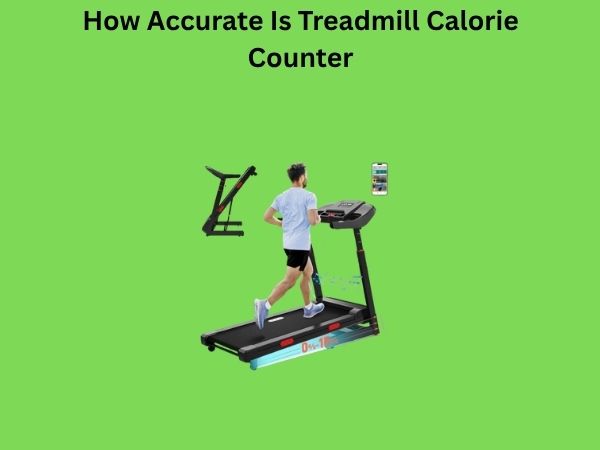
How Accurate Is Treadmill Calorie Counter: The Truth Revealed
You’re standing on your treadmill, watching that little digital display flash calorie numbers like a slot machine at your local casino. You’ve just finished a grueling 45-minute run, and the machine proudly announces you’ve burned 567 calories. You feel accomplished, maybe even treat yourself to a reward later. But here’s the uncomfortable question that keeps you up at night: is that number actually real, or are you chasing a fitness fantasy?
I get it. We want our hard work to count for something tangible, something we can measure and celebrate. But the truth about treadmill calorie counters is far more complicated than the bright numbers on your screen suggest. Let me walk you through what’s really happening when that machine calculates your calorie burn, and more importantly, why you might be getting wildly inaccurate results.
Understanding the Calorie Counter Illusion
Before we dive deep into the accuracy question, let’s establish what we’re actually talking about. A calorie, in fitness terms, is a unit of energy your body burns to perform activities. Your treadmill’s job is to estimate how much energy you’re expending during your workout. Sounds straightforward, right? Wrong.
The problem begins with the fundamental limitations of the machine itself. Your treadmill doesn’t actually know anything about you beyond what you punch in at the start. It’s making educated guesses, and as any statistician will tell you, guesses are only as good as the assumptions behind them.
How Treadmill Calorie Counters Actually Work
The Basic Formula Behind the Numbers
Most treadmills use a relatively simple calculation formula to estimate your calorie expenditure. Here’s what typically happens: you input your weight, age, and perhaps your gender. Then you set the speed and incline, and the machine assumes it knows everything it needs to calculate your burn rate.
The treadmill uses these inputs to estimate your metabolic rate, then applies multipliers based on the intensity of your workout. It’s using what’s called the MET system—Metabolic Equivalent of Task—which assigns energy expenditure values to different activities. A treadmill running at a specific speed and incline gets assigned a certain MET value, which is then multiplied by your body weight to estimate total energy burn.
On the surface, this seems logical. But this is where things start falling apart like a poorly constructed sandcastle.
What Information Your Treadmill Actually Ignores
Here’s the shocking part: your treadmill is completely blind to some of the most crucial factors that determine how many calories you actually burn. Think of it like trying to predict someone’s happiness based solely on their income. You’re missing about 90 percent of the story.
- Your actual fitness level: A marathon runner and a couch potato might weigh the same, but their bodies burn calories at dramatically different rates at the same speed. Your treadmill can’t tell the difference.
- Your muscle composition: Muscle tissue burns more calories at rest than fat tissue does. Two people of identical weight and age might have completely different muscle-to-fat ratios, yet the treadmill treats them identically.
- Your metabolic health: Thyroid conditions, hormonal imbalances, and metabolic disorders can significantly impact calorie burn, but your treadmill has no way of knowing about these factors.
- Whether you’re pushing or holding on: Many people unconsciously grip the handrails, which reduces the actual calorie burn by up to 25 percent. The machine can’t see this.
- The air temperature and humidity: Your body works harder to regulate temperature in different environments, but your machine assumes a neutral setting.
- Your caffeine intake and sleep quality: Both of these dramatically affect metabolism, yet they’re completely invisible to the display.
The Research: What Studies Actually Show
Major Scientific Findings on Treadmill Accuracy
Researchers have been investigating this question for years, and the results are consistently disappointing for anyone hoping for precision. Multiple peer-reviewed studies have found that treadmill calorie counters are often wildly inaccurate, sometimes off by as much as 20 to 30 percent in either direction.
One notable study examined several popular treadmill models and found that the machines overestimated calorie burn in about 60 percent of test cases and underestimated it in 40 percent. The variation was so large that researchers concluded you couldn’t reliably use these numbers for weight loss planning or nutritional tracking.
What’s particularly interesting is that the error rate wasn’t consistent. Some people got overestimates, while others got underestimates, sometimes by huge margins. This inconsistency is actually worse than a systematic bias because at least with systematic bias, you could compensate for it.
Why Different Treadmills Give Different Results
If you’ve ever used different treadmills at your gym, you’ve probably noticed they give you different calorie counts for the same workout. This isn’t a coincidence. Different manufacturers use different algorithms and different assumptions about human physiology.
Some machines are programmed more conservatively and tend to underestimate burn rates. Others are programmed aggressively and tend to overestimate. There’s no industry standard, so you’re basically at the mercy of whoever programmed that particular machine.
The Weight Variable: Your Treadmill’s Biggest Weakness
Let’s talk about weight, because this is where the treadmill’s fundamental flaw becomes crystal clear. The machine assumes that calorie burn scales directly with body weight. In other words, if you weigh twice as much as another person, you burn twice the calories at the same speed and incline.
This assumption is partially true—heavier bodies do require more energy to move—but it’s far from the complete picture. A 200-pound person with 40 percent body fat and a 200-pound person with 15 percent body fat are essentially different machines, yet your treadmill treats them identically.
Additionally, your treadmill has no idea what your actual resting metabolic rate is. It’s making assumptions based on generic population averages. If your metabolism is naturally faster or slower than average, you’re getting wrong results.
The Incline Illusion
Does Adding Incline Really Add Accuracy?
Many fitness enthusiasts believe that running on an incline increases the accuracy of calorie calculations because it increases the difficulty. This is partially true—incline does increase calorie burn—but the treadmill’s calculation of that increase is still based on assumptions rather than actual measurements of your body.
When you increase the incline, the treadmill assumes you’re burning proportionally more calories based on biomechanical models that may or may not apply to your specific body. Some people benefit more from incline training than others due to leg strength, running form, and muscle composition.
So while incline workouts are definitely harder and do burn more calories, the number your machine displays might still be significantly off from reality.
The Speed Problem: Intensity Isn’t Everything
Speed is another variable where treadmills struggle with accuracy. The machine assumes that running at 8 miles per hour burns a certain amount of calories, but this doesn’t account for your running efficiency.
Some runners are incredibly efficient—they use minimal energy to cover distance. Others are less efficient and burn more energy doing the same work. This is partly biomechanics, partly training, and partly neuromuscular efficiency. Your treadmill can’t measure any of this.
Additionally, if you’re walking rather than running at a particular speed, the energy expenditure is different, but the treadmill might not distinguish between the two if you don’t have a walking-specific mode.
Heart Rate Monitoring: A More Reliable Alternative?
How Heart Rate Factors Into the Equation
Some modern treadmills integrate heart rate data, either through chest straps or hand sensors. This seems like it should improve accuracy, and to some extent it does. Your heart rate is actually a better proxy for energy expenditure than treadmill settings alone.
However, even heart rate-based calculations have significant limitations. Caffeine, stress, medications, and even the temperature can all affect your heart rate without changing your actual calorie burn. Plus, hand sensors are notoriously unreliable because they depend on proper contact, which most people don’t maintain during a vigorous workout.
Chest strap monitors are more accurate, but they still can’t account for individual variations in how efficiently your body converts heart rate into actual energy expenditure.
Personal Factors That Make Numbers Unreliable
Age and Metabolism Changes
Your treadmill asks for your age, and it assumes this feeds into a standard metabolic aging curve. But here’s the thing: metabolism doesn’t decline at the same rate for everyone. Some people maintain high metabolic rates into their later years, while others experience faster declines.
Your age is a poor proxy for your actual metabolic capacity, yet it’s built into most treadmill algorithms as a key variable.
The Gender Variable Assumption
Treadmills typically ask if you’re male or female and then apply different multipliers based on average hormonal and body composition differences. But these are just averages. Individual variation within each gender is enormous.
A woman with unusually high muscle mass and low body fat might burn calories more like the average man, while a man with low muscle mass might burn calories more like the average woman. The machine can’t adapt for this.
Environmental and Behavioral Factors
Are you gripping the handrails? Your treadmill doesn’t know. Are you leaning forward or back? Unknown. Are you on the verge of overheating, which increases metabolic stress? No data. Is this your third treadmill session of the week, so your body is more efficient? Completely invisible to the machine.
Why Overestimation Is Particularly Problematic
If treadmills were consistently underestimating calorie burn, that would be one thing. You’d just reduce your actual intake a bit to compensate. But overestimation is far more dangerous because it leads to a false sense of accomplishment.
When your treadmill tells you that you’ve burned 600 calories, and you then consume a 600-calorie smoothie thinking you’re breaking even, you might actually be in a 200-calorie surplus if the machine overestimated. Multiply this by dozens of workouts over weeks and months, and you’re looking at significant weight gain despite feeling like you’re working hard.
This is why so many people get frustrated with their fitness journeys. They’re working incredibly hard, trusting their treadmill, and not seeing the results they expect. It’s not always lack of effort—it’s lack of accuracy in measurement.
Practical Strategies to Get More Accurate Information
Use Multiple Data Points
Instead of trusting a single treadmill number, collect data from multiple sources. Use a smartwatch, a fitness tracker, and your treadmill, then average the results. This won’t give you perfect accuracy, but it reduces the chance that one wildly inaccurate source is throwing off your entire calculation.
Apply a Discount Factor
Research suggests that many treadmills overestimate by 10 to 20 percent on average. Try reducing whatever number your machine shows by 15 percent and see if that leads to better results over time. Track your progress—if you’re losing weight as expected, you’re probably closer to reality.
Consider Your Actual Body Composition
If you know your body composition through a DEXA scan, bioelectrical impedance, or other measurement, you can get a better sense of your actual resting metabolic rate and adjust accordingly. Higher muscle mass means higher calorie burn.
Account for Your Fitness Level
If you’re highly trained, your body is efficient, and you might burn fewer calories than a less-trained person at the same intensity. Conversely, if you’re just starting out, your body might not be as efficient and could burn more. Consider this when interpreting your treadmill numbers.
The Real Purpose of Treadmill Calorie Counters
Here’s an honest perspective: treadmill calorie counters aren’t meant to be precise nutritional measuring devices. They’re meant to give you a rough estimate and help you track relative progress. The goal isn’t perfect accuracy—it’s consistency for comparison purposes.
What matters more than the absolute number is the trend. If your treadmill shows you burning 400 calories today and 420 calories next week while doing the same workout, that upward trend is meaningful because it’s consistent with the machine’s bias. You’re getting fitter, and the relative measurement reflects that.
Calibration: Does It Help?
Some gym-goers ask whether they should calibrate their treadmill to improve accuracy. Unfortunately, most commercial treadmills aren’t designed for user calibration, and even if they were, calibration would only fix some of the systematic issues. It can’t account for individual biological variation.
Conclusion
So, how accurate is your treadmill’s calorie counter? The honest answer is: probably not very. Most treadmills can be off by 20 to 30 percent or more, and some can be worse. The machines are making too many assumptions about your body, your fitness level, your running efficiency, and dozens of other factors they can’t possibly know.
This doesn’t mean treadmills are useless—they’re still great for cardiovascular training, and the calorie numbers can give you a rough ballpark figure for planning purposes. Just don’t treat them as gospel truth. Use them as one data point among many, apply a healthy skepticism, and track your actual results over time.
The real lesson here is that fitness isn’t about the numbers on a machine. It’s about how you feel, how your clothes fit, and what your body can do. If you’re working hard, eating sensibly, and being consistent, you’ll see results regardless of whether your treadmill is perfectly accurate. The machine is just along for the ride, not the ultimate judge of your progress.
Frequently Asked Questions
Do all treadmills overestimate calories, or do some underestimate?
Treadmills vary significantly in their accuracy patterns. Research shows that roughly 60 percent of treadmills tend to overestimate calorie burn, while about 40 percent underestimate. The variation is so large that you can’t assume a particular machine will always overestimate or underestimate. This is why it’s crucial to track your actual results rather than relying solely on the machine’s display. Some brands are more conservative in their calculations, while others are more aggressive, but even within the same brand, different models can vary widely.
Can I improve treadmill accuracy by inputting my body composition?
Unfortunately, most commercial treadmills only allow you to input basic information like weight, age, and gender. They don’t have fields for body composition percentages or fitness level, even though these factors significantly impact calorie burn. Some high-end fitness trackers and smartwatches do account for body composition if you input that data, but treadmills rarely do. If your gym has a treadmill that allows this kind of detailed input, you’ll likely get more accurate results, but standard commercial treadmills won’t.
Is it better to trust my smartwatch or my treadmill for calorie counting?
This is actually a tricky question because both devices have limitations. Smartwatches often use algorithms