How Fast Is 8 MPH on a Treadmill? Speed Guide
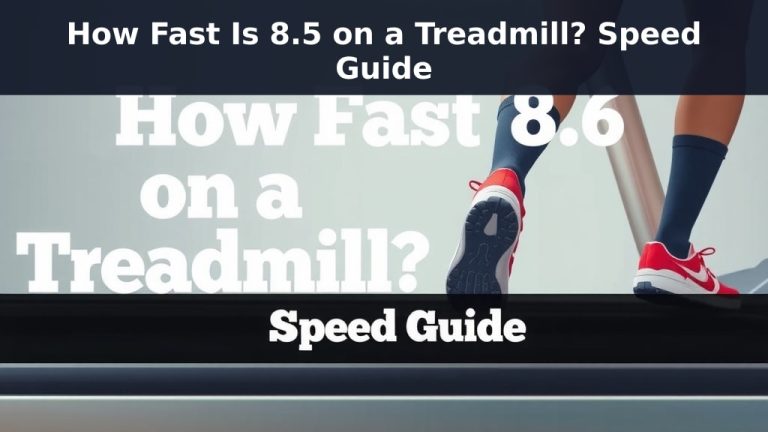
So, you’re wondering, “How fast is 8 mph on a treadmill?” Simply put, 8 mph is a very brisk pace. It’s faster than a typical jogging speed for most people. You’ll be moving at a speed that feels like a strong sprint for many fitness enthusiasts.
This speed is often used for high-intensity interval training (HIIT) on treadmills. It can also be your target for a fast-paced run. Many runners aim for this pace for speed work. It pushes your cardiovascular system effectively. Mastering 8 mph means you’re quite fit.
- 8 mph is a fast running pace, often considered a sprint.
- It’s quicker than average jogging speeds for most individuals.
- This speed is excellent for high-intensity interval training (HIIT).
- Aiming for 8 mph pushes your stamina and cardiovascular health.
- Many experienced runners use this pace for speed workouts.
Let’s break down what 8 mph really feels like on your treadmill and how you can best use this speed for your workouts.
Understanding Treadmill Speed: What Does 8 MPH Really Mean?
So, you’re curious about 8 miles per hour on a treadmill. It’s a pace that feels pretty intense for most people. Think of it as a serious running speed. This isn’t your casual stroll or even a light jog. You’ll likely find yourself working hard to maintain this pace.
Many runners use 8 mph for specific training goals. It’s often considered a fast interval pace. This means you might only hold it for short bursts. It’s a speed that really challenges your cardiovascular system. It requires a good level of fitness to sustain for any length of time.
The Physiology of an 8 MPH Pace
When you hit 8 mph on a treadmill, your body is working at a high capacity. Your heart rate will climb quickly. You’ll feel your breathing become much deeper and faster. This pace demands a lot from your leg muscles and lungs.
Cardiovascular Demand at 8 MPH
Research shows that running at this speed significantly increases your heart rate. It pushes your heart to pump more blood. This helps to improve your aerobic capacity over time (National Heart, Lung, and Blood Institute). You’re building endurance and making your heart stronger.
Your VO2 max, which is a measure of how well your body uses oxygen, will be tested. Holding 8 mph means you’re approaching your maximal oxygen uptake. This is why it’s so effective for fitness improvements. It’s a real cardio challenge.
Muscular Effort and Impact
At 8 mph, your stride length and frequency increase. Your leg muscles, including your quads, hamstrings, and calves, work harder. You’ll also engage your core more to maintain stability. This can lead to a great full-body workout, even though it’s primarily a lower-body exercise.
Be aware that higher speeds also mean higher impact. Your feet hit the treadmill belt with more force. This is why proper footwear and good running form are so important at this pace. It helps to prevent injuries.
What Kind of Workout is 8 MPH?
An 8 mph pace usually falls into the category of speed work. It’s not a pace you’d typically sustain for a long-distance run. Instead, it’s used strategically to boost performance and fitness.
High-Intensity Interval Training (HIIT)
This is where 8 mph truly shines for many. In HIIT, you alternate between short bursts of very intense exercise and periods of rest or lower-intensity recovery. Running at 8 mph for 30 seconds to a couple of minutes, followed by walking or jogging, is a classic HIIT protocol.
This method is incredibly effective for burning calories. It also boosts your metabolism long after your workout is done. Many studies suggest HIIT can lead to similar or even better fitness gains than steady-state cardio, but in less time (American College of Sports Medicine). It’s efficiency at its finest.
Tempo Runs and Speed Endurance
For more advanced runners, 8 mph might be a tempo run pace. A tempo run is a sustained effort at a comfortably hard pace. It’s faster than your easy jog but not an all-out sprint. This helps build your lactate threshold. That’s the point where lactic acid builds up faster than your body can clear it.
If you can hold 8 mph for 20-30 minutes, you have impressive speed endurance. This pace is often used by runners preparing for races. It conditions your body to run faster for longer periods. It’s a tough but rewarding workout.
Who Can Run at 8 MPH?
Running at 8 mph isn’t for everyone, especially beginners. It requires a solid fitness foundation. Most casual joggers might find this pace too challenging to maintain for more than a minute or two.
Beginner Considerations
If you’re new to running or treadmills, 8 mph is likely out of reach initially. It’s best to start with walking and light jogging. Gradually increase your speed and duration as you get fitter. Don’t rush it; listen to your body.
A good starting point might be a brisk walk at 3-4 mph, progressing to a jog around 5-6 mph. Your goal is to build up to longer runs at these speeds first. Jumping straight to 8 mph can lead to frustration and injury.
Intermediate to Advanced Runners
If you’re already a regular runner, 8 mph might be a challenging but achievable goal. You might use it for interval sprints or as the faster part of a tempo run. It signals a good level of fitness where you’re comfortable pushing your limits.
Many recreational runners who train consistently can incorporate 8 mph into their routines. It’s a benchmark that shows you’re serious about your training. It’s a marker of progress.
Comparing 8 MPH to Real-World Speeds
To put 8 mph into perspective, let’s compare it to everyday activities and speeds.
| Activity/Speed | Approximate Pace | Treadmill Equivalent |
|---|---|---|
| Brisk Walking | 3.5 – 4.5 mph | ~13:20 – 16:00 min/mile |
| Light Jogging | 5 – 6 mph | ~10:00 – 12:00 min/mile |
| 8 MPH Treadmill Speed | 7.5 mph (actual running pace) | 7:30 min/mile |
| Fast Sprint (Casual) | ~8 – 9 mph | ~6:40 – 7:30 min/mile |
| Elite Marathon Pace | ~12 – 13 mph | ~4:30 – 5:00 min/mile |
As you can see, 8 mph on a treadmill translates to a 7:30 minute per mile pace. This is a very fast pace for most people. It’s close to what many would consider a sprint. Elite marathon runners, who average over 12 mph, are in a different league entirely.
Tips for Running at 8 MPH
If you’re aiming to run at 8 mph, or incorporate it into your training, here are some tips:
- Build up gradually: Don’t jump straight to 8 mph. Increase your speed and duration slowly over weeks.
- Focus on form: Maintain good posture, a slight forward lean, and quick, light steps.
- Warm up properly: Always start with a 5-10 minute warm-up of walking and light jogging.
- Cool down afterwards: Finish with a cool-down walk and some stretching.
- Listen to your body: If you feel pain, slow down or stop. Pushing too hard can lead to injury.
- Stay hydrated: Drink water before, during, and after your run.
Remember, 8 mph is a significant speed on a treadmill. It’s a testament to your fitness when you can run comfortably at this pace. Use it wisely for challenging workouts and watch your fitness soar!
Conclusion
So, you’ve learned that 8 mph on a treadmill is a seriously fast pace, often comparable to a sprint for many. It’s a speed that offers substantial cardiovascular benefits and is excellent for high-intensity interval training. Reaching this speed is a marker of good fitness, but it’s crucial to build up to it safely. Remember to prioritize proper form, warm-ups, and listen to your body to avoid injuries. Ready to push your limits? Start incorporating gradual increases in speed into your routine and aim to challenge yourself safely at this demanding pace!
Frequently Asked Questions
Is 8 mph on a treadmill too fast for beginners?
Yes, 8 mph is generally too fast for most beginners. It’s a speed that requires a solid fitness base. Beginners should focus on building endurance with walking and lighter jogging paces first. Gradually increasing speed over time is key to avoid injury and frustration.
How many calories can you burn running at 8 mph?
Running at 8 mph burns a significant number of calories due to the high intensity. The exact amount depends on your body weight and the duration of your run. A general estimate is that you could burn 100-200 calories in just 10-15 minutes at this pace.
What is a 7:30 mile pace, and how does it relate to 8 mph?
An 8 mph treadmill speed directly translates to a 7:30 minute per mile pace. This is considered a fast running pace for most recreational runners. It indicates a high level of cardiovascular fitness and leg speed.
Can I maintain 8 mph for a long-distance run?
No, maintaining 8 mph for a long-distance run is not realistic for most people. This speed is typically used for shorter bursts in interval training or as a tempo pace for advanced runners. Long-distance running involves much slower, sustainable paces.
How can I safely work up to running at 8 mph?
To safely work up to 8 mph, start by increasing your jogging speed by 0.5 mph each week. Incorporate interval training with short bursts at your target speed, followed by recovery. Always warm up thoroughly and cool down afterwards. Listen to your body and don’t push through pain.