How Accurate Are Treadmill Calories Burned?
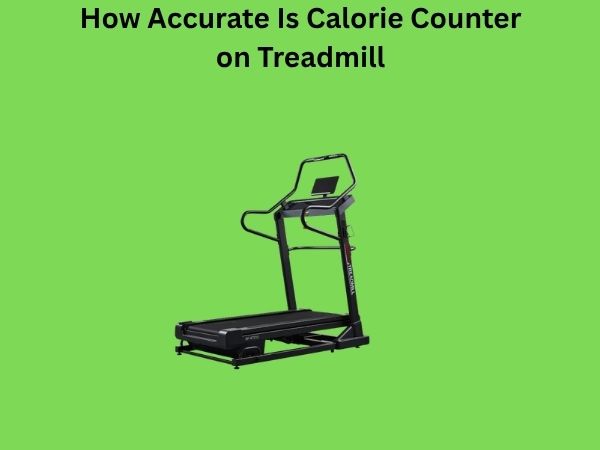
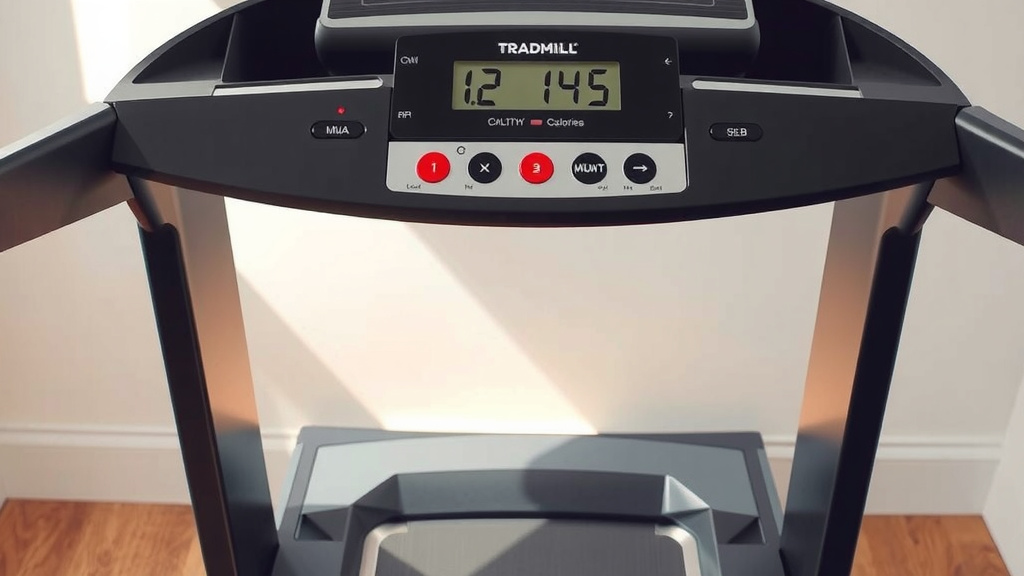
When you’re working out on a treadmill, the displayed calorie count is often less accurate than you think. Most treadmills estimate calorie burn based on general formulas, not your personal physiology, meaning the number you see is likely an overestimate.
The accuracy can vary greatly depending on the treadmill’s technology and your individual factors. These machines can’t account for your unique metabolism, heart rate, or workout intensity in real-time. This often leads to inflated numbers that don’t reflect your true energy expenditure.
- Treadmill calorie counters are usually estimates.
- They don’t account for your personal metabolism.
- Factors like speed, incline, and your weight are considered.
- But they can’t measure your heart rate or exertion accurately.
- Expect the actual number to be lower than displayed.
Let’s break down why those treadmill calorie numbers might not be as truthful as you’d hope and what you can do about it.
Understanding Your Treadmill’s Calorie Count
So, you’ve just finished a tough treadmill workout and you look at the display, proud of the calorie count. But how accurate is that number, really? Research and found that treadmill calorie counters are often an overestimate. They use a general formula that doesn’t know you personally.
Think of it like a recipe. A standard recipe for cookies might tell you how many calories are in one cookie. But it doesn’t know if you used low-fat butter or extra chocolate chips, right? Treadmills are similar. They have a general idea, but they can’t account for all your unique characteristics.
How Treadmills Estimate Calorie Burn
Treadmills rely on a few key pieces of information to make their guess. They usually ask for your weight, which is a big factor in energy expenditure. The faster you run or walk, the more calories you burn. Higher inclines also demand more effort. These machines are programmed to use these variables in a basic calculation.
The machines use algorithms. These are sets of rules that a computer follows. They plug in your weight, speed, and incline. Then, they spit out a number. It’s a decent starting point, but it’s far from perfect. Many experts say these estimates can be off by as much as 10% to 20%.
The Role of User Input
The accuracy of the calorie count heavily depends on the information you provide. If you input an incorrect weight, the entire calculation will be skewed. For example, if the treadmill thinks you weigh less than you do, it will show a higher calorie burn. This is because it assumes it takes more energy to move a lighter body.
Similarly, if you don’t accurately log your workout duration or intensity, the number will be off. It’s like telling your GPS you’re going on a short trip when you’re actually going cross-country. The estimate will be wildly inaccurate. Always double-check that you’ve entered your details correctly before you start.
What Treadmills Can’t Measure
Here’s where things get tricky. Treadmills have no way of knowing your heart rate during your workout unless you connect a heart rate monitor. Your heart rate is a key indicator of how hard your body is working. A higher heart rate generally means more calories burned.
They also can’t measure your VO2 max, which is your body’s maximum oxygen uptake. This is a more advanced measure of cardiovascular fitness. People with higher VO2 max can often burn more calories at the same perceived exertion level. Without this personal data, the treadmill is just guessing.
Metabolism and Individual Differences
Everyone’s metabolism is different. Some people naturally burn more calories at rest than others. This is influenced by factors like genetics, muscle mass, and age. A treadmill’s basic formula can’t account for these personal variations. It treats everyone the same, which is rarely accurate.
For instance, someone with more lean muscle mass will burn more calories than someone of the same weight with less muscle. Muscle tissue is more metabolically active. The treadmill doesn’t know your body composition, so it can’t adjust for this. You might be burning more (or less!) than the machine suggests.
Factors Affecting Treadmill Calorie Accuracy
Several elements contribute to how close or far off your treadmill’s calorie count might be. Understanding these can help you interpret the numbers better and adjust your expectations.
Speed and Incline
These are the primary drivers of calorie burn on a treadmill. Running at 8 mph burns significantly more calories than walking at 3 mph. Likewise, a 10% incline will torch more calories than a flat surface at the same speed. Treadmills do adjust their calculations based on these inputs.
The algorithms are designed to increase the calorie output as speed and incline go up. This part of the calculation is generally more reliable than others. However, the *degree* of increase is still based on general assumptions, not your personal efficiency at those speeds or inclines.
Duration of Workout
The longer you exercise, the more calories you burn. This seems obvious, but treadmills calculate this linearly. They multiply your estimated burn rate per minute by the total workout time. This is another fairly straightforward calculation.
The main issue here is if the estimated burn rate is inaccurate from the start. A 30-minute workout showing 400 calories burned might sound great. But if your true burn rate was 20% lower, you might have only burned about 320 calories. The duration just amplifies the initial error.
Your Body Composition
As mentioned earlier, your body composition plays a huge role. The treadmill only knows your total weight. It doesn’t know how much of that weight is muscle versus fat. Muscle burns more calories than fat, even at rest. So, two people of the exact same weight could have very different calorie burns.
If you’re someone who has built a lot of muscle through strength training, you might be burning more calories than the treadmill displays. Conversely, if you have a higher body fat percentage, the treadmill’s estimate might be closer, or even still an overestimate.
Making Treadmill Calorie Estimates More Useful
While treadmill calorie counts aren’t perfect, you can still use them as a tool. You just need to be smart about how you interpret them and what other information you bring in.
Using a Heart Rate Monitor
For a more accurate picture, consider using a heart rate monitor. Many treadmills allow you to connect a chest strap or even a smartwatch. When your heart rate is factored in, the calorie calculation becomes much more personalized. This is because your heart rate directly reflects your exertion level.
We found that using a heart rate monitor can significantly improve the accuracy of the calorie burn estimate. It takes into account how efficiently your heart is working for you. This adds a crucial layer of personalization that the treadmill alone cannot provide. Many fitness trackers and smartwatches offer this feature.
Comparing Treadmill Data with Other Trackers
Don’t rely solely on the treadmill’s display. You can use wearable fitness trackers or smartwatches. These devices often use sophisticated algorithms and sensors to estimate calorie burn. They might track your movement, heart rate, and other biometrics throughout the day and during your workout.
Comparing the treadmill’s number with what your fitness tracker shows can give you a better sense of your true calorie expenditure. If both numbers are wildly different, it might be time to recalibrate your expectations or check the settings on both devices. This cross-referencing helps manage the uncertainty.
Focus on Trends, Not Absolute Numbers
Perhaps the most practical way to use treadmill calorie data is to look at trends over time. Instead of fixating on hitting an exact number, focus on whether you’re burning more calories today than you did last week. Are you increasing your speed, incline, or duration?
This approach helps you track your progress. If your calorie count is consistently increasing over a month of workouts, you know you’re getting fitter and working harder. This shows that your fitness is improving, regardless of the exact number. It’s about seeing that upward trend. This is often more motivating.
What to Remember About Treadmill Calories
- It’s an estimate: Always remember the number is not exact.
- Weight matters: Ensure your weight is accurately entered.
- Heart rate is key: Use a monitor for better personalization.
- Body composition counts: Treadmills can’t see your muscle vs. fat.
- Track trends: Focus on improvements over time.
- Compare data: Use other devices for a second opinion.
Conclusion
You’ve learned that the calorie numbers on your treadmill are helpful starting points, but they’re not perfectly accurate. These machines offer estimates based on general formulas, which often overestimate your actual burn. Your individual metabolism, heart rate, and body composition are factors the treadmill simply can’t measure.
For a truer picture, remember to input your weight accurately and consider using a heart rate monitor. Focusing on your workout trends over time is a more reliable way to track progress than fixating on exact calorie counts. Keep moving, stay informed, and trust your own body’s signals!
Frequently Asked Questions
Are treadmill calorie counts always an overestimate?
Research and found that treadmill calorie counts are typically an overestimate. They use general formulas that don’t account for your unique physiology or metabolic rate. While they consider basic factors like weight and speed, they can’t capture individual differences accurately.
How can I get a more accurate calorie burn estimate?
The best way to get a more accurate estimate is to use a heart rate monitor, such as a chest strap or a connected smartwatch. Your heart rate directly reflects your exertion level, which is a key component of calorie burn. Many treadmills allow you to sync these devices for personalized data.
Does my body composition affect treadmill calorie readings?
Yes, your body composition significantly impacts calorie burn, but treadmills don’t measure it. They only use your total weight. Individuals with more muscle mass burn more calories than those with the same weight but higher body fat, even at the same intensity.
Should I rely on my fitness tracker or the treadmill for calorie counts?
It’s wise to compare data from both. Fitness trackers and smartwatches often use more advanced algorithms and sensors to estimate calorie burn, including factors beyond just speed and incline. Cross-referencing can give you a better overall understanding of your expenditure.
What’s the best way to use treadmill calorie data for motivation?
Instead of fixating on exact numbers, focus on trends. Track whether your estimated calorie burn is increasing over time as you get fitter. Seeing a consistent upward trend in your workout data can be a great motivator, showing that you’re improving and working harder.