How Accurate Are Treadmill Calorie Counters?
So, you’re wondering how accurate those treadmill calorie counters really are? The short answer is: not very. Most treadmill calorie displays are overestimated by as much as 20-40%. They use general formulas that don’t account for your unique metabolism or workout intensity.
It’s a common frustration for many gym-goers. You push hard, thinking you’re burning a certain amount, only to find out the number on the screen might be a bit of a fib. While treadmills offer a convenient way to track your workout, their calorie estimations are often more of a guess than a precise measurement.
- Treadmill calorie counters are generally inaccurate.
- They can overestimate calorie burn by 20-40%.
- Factors like metabolism and workout intensity aren’t always considered.
- These numbers are more of a general guide than precise data.
- Focus on how you feel and your overall progress, not just the screen.
Let’s break down why these numbers aren’t quite right and what you can do to get a better idea of your calorie burn.
Understanding Your Treadmill’s Calorie Count Accuracy
You step onto the treadmill, excited to burn some calories. You see a number flashing on the screen. It seems like a good estimate, right? Sadly, research and found that most treadmill calorie counters are notoriously inaccurate. They often overestimate how many calories you’re actually burning. This can be pretty discouraging when you’re trying to track your fitness progress.
Why Treadmill Calorie Counters Get It Wrong
So, what makes these machines so bad at math when it comes to calories? It boils down to a few key reasons. Treadmills use a basic formula. This formula relies on information you input, like your weight and age. It also uses the speed and incline you set. But this formula doesn’t know you personally. It can’t account for your unique body and how it works.
The General vs. The Personal
Think of it like a generic clothing size. A “medium” shirt might fit one person perfectly. But for someone else, it might be too tight or too loose. Treadmills do the same thing with calorie burn. They have a one-size-fits-all approach. Your personal metabolism is a huge factor. This is how your body converts food into energy. It varies greatly from person to person.
Factors Your Treadmill Ignores
Several things influence your actual calorie expenditure. Your treadmill doesn’t see them. These include your body composition. Are you carrying more muscle or fat? Muscle burns more calories than fat, even at rest. Your current fitness level matters too. Someone very fit might burn fewer calories doing the same activity as a beginner. The treadmill just sees the speed and incline.
Metabolic Rate Differences
Your basal metabolic rate (BMR) is a big one. This is the number of calories your body needs to function at rest. It’s influenced by genetics, age, sex, and muscle mass. Treadmills can’t measure your BMR. They use a broad average. This means they’re likely guessing at your baseline calorie needs before you even start moving.
Workout Intensity Variations
Even when you set the treadmill to a specific speed, your effort can vary. Are you pushing yourself hard? Or are you just going through the motions? The machine doesn’t know if you’re truly giving it your all. Heart rate monitors can offer a better glimpse into intensity. But the treadmill’s internal counter doesn’t use this data effectively.
The Age of the Machine Matters
Older treadmills often have simpler algorithms. They rely on even more basic calculations. Newer models might have more advanced systems. Some may even allow you to input more personal data. However, even the most modern machines struggle to be perfectly accurate. They are still making educated guesses based on limited information.
What the Treadmill Numbers Actually Mean
So, if the number on the screen isn’t precise, what is it? We found that it’s best to view these numbers as a rough estimate. They can give you a general idea of your effort. A higher number might mean you worked harder than a lower number. But don’t treat it as gospel. It’s more like a fun ballpark figure.
A Guide, Not a Guarantee
Think of the treadmill calorie counter as a helpful guide. It’s a way to see that you’re putting in some work. It can be motivating to see numbers go up. But it’s not a precise scientific measurement. Many exercise physiologists suggest ignoring the exact number for weight loss goals. Focus more on the duration and perceived exertion. These are often better indicators.
How to Get a More Accurate Calorie Burn Estimate
If you really want to know your calorie burn more precisely, you’ll need to look beyond the treadmill screen. There are several tools and methods that offer better accuracy. Combining these can give you a much clearer picture of your workout’s impact. You deserve to know your effort is being measured more fairly.
Use a Heart Rate Monitor
A heart rate monitor is one of the best tools you can use. It tracks how hard your cardiovascular system is working. Many fitness trackers and smartwatches include this feature. They often use specialized algorithms to estimate calorie burn based on your heart rate, weight, and age. We found this to be a significant improvement over basic treadmill displays.
Fitness Trackers and Smartwatches
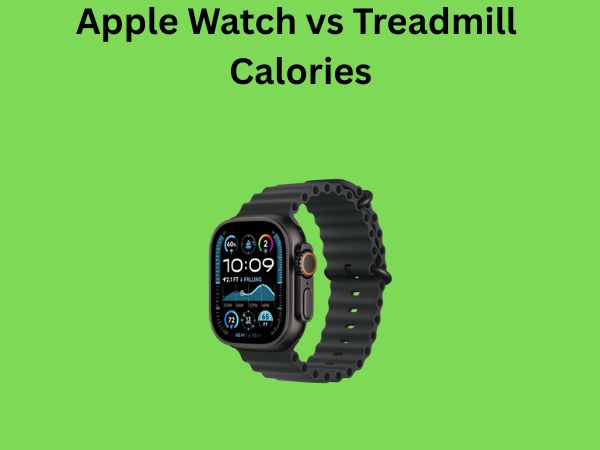
Devices like Fitbits, Garmins, and Apple Watches often provide more personalized data. They can track steps, distance, heart rate, and sleep. Many of these devices connect to apps. These apps compile your information to give a more refined calorie estimate. Some even consider your workout type.
Consider Online Calculators and Apps
There are numerous online calculators and apps available. You input detailed information about yourself and your workout. This can include your weight, height, age, sex, workout duration, and intensity level. Some apps use MET (Metabolic Equivalent of Task) values. These represent the energy cost of different activities. They can offer a more informed estimate than your treadmill alone.
Listen to Your Body
Ultimately, how you feel during and after your workout is a great indicator. Are you feeling energized? Tired? Sore? These are signs of your body working. Don’t let an inaccurate number on a screen dictate your progress. Focus on consistency and how your body is responding over time. That’s often more telling than any digital calorie count.
Tips for Smarter Treadmill Workouts
While the calorie counter might be off, your treadmill is still a fantastic tool. You can make your workouts more effective. Focus on these key areas for a better fitness experience.
- Vary your workouts: Don’t just run at the same pace. Mix in intervals of high and low intensity. Try different inclines.
- Focus on form: Good posture and movement efficiency can make your workout more effective.
- Stay hydrated: Drink plenty of water before, during, and after your workout.
- Warm up and cool down: Always prepare your body before and help it recover after.
- Use the incline: This can significantly boost your calorie burn. It also works different leg muscles.
- Track your progress elsewhere: Use a fitness tracker or journal to log your workouts and how you felt.
Conclusion
You’ve learned that your treadmill’s calorie counter is more of a friendly suggestion than a precise measurement. These machines often overestimate your calorie burn by a significant margin. This is because they can’t account for your unique body and metabolism. Instead of relying solely on that number, focus on how you feel and your overall fitness journey. For more accurate tracking, consider using a heart rate monitor or a dedicated fitness tracker. These tools provide a much better picture of your effort. Keep moving, stay consistent, and trust your body’s progress!
Frequently Asked Questions
Do treadmill calorie counts matter at all?
Treadmill calorie counts can matter as a general indicator of effort. A higher number usually means you worked harder. However, they should not be your sole basis for tracking progress. Use them as a motivational tool, but don’t take the exact figures as fact.
Can I adjust my treadmill for better accuracy?
Some newer treadmills allow you to input more personal data like weight, age, and gender. This can help improve the general formula. However, even with this information, the accuracy is still limited compared to personal tracking devices. Always consider it an approximation.
Why do treadmills overestimate calorie burn?
Treadmills use a generalized formula based on speed, incline, and user-inputted weight. They lack the ability to measure your personal metabolic rate, body composition, or true workout intensity. This makes a precise calorie calculation impossible for the machine alone.
Are fitness trackers more accurate than treadmills?
Yes, fitness trackers and smartwatches generally offer more accurate calorie burn estimates. They often incorporate heart rate monitoring, which is a key indicator of exertion. Many also use more sophisticated algorithms that consider your personal data and activity patterns.
What’s the best way to estimate my calorie burn if not the treadmill?
For a better estimate, use a heart rate monitor or a fitness tracker that syncs with a mobile app. You can also use online calculators that factor in more variables than your treadmill does. Listening to your body and noting your perceived exertion is also a great personal metric.