How Fast is a 15 Minute Mile on a Treadmill? Complete Guide to Speed, Fitness Levels, and Performance
Have you ever wondered what speed you should be running on your treadmill to achieve that elusive 15-minute mile? Whether you’re just starting your fitness journey or you’re a seasoned runner looking to understand your pace better, this question hits right at the heart of workout planning. Let me break down everything you need to know about 15-minute miles on a treadmill, from the exact speed settings to how this pace compares to your overall fitness level.
Quick Answer: The Exact Speed for a 15 Minute Mile
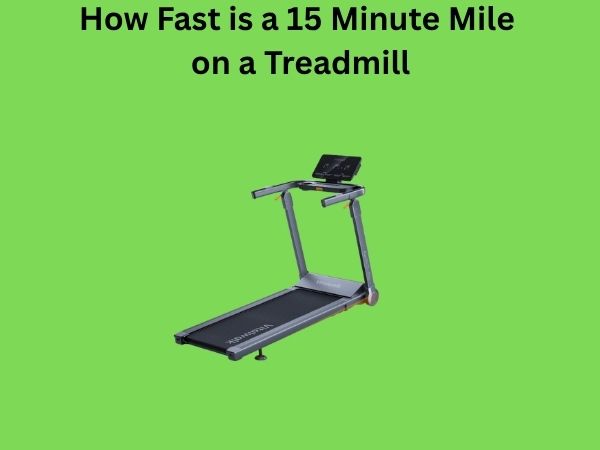
Let’s cut to the chase. A 15-minute mile on a treadmill translates to running at 4 miles per hour (mph). Think of it this way: if you cover one mile in 15 minutes, you’re moving at exactly 4 mph. This is the number you’ll want to dial in on your treadmill’s speed control to maintain that pace consistently.
Understanding Pace vs. Speed on Your Treadmill
Before we dive deeper, let’s clarify something that confuses many people. Speed and pace are two sides of the same coin, but they measure things differently. Speed tells you how many miles you’re covering per hour, while pace tells you how many minutes it takes to cover one mile. It’s like asking whether you prefer to know how fast a car is going (speed) or how long it takes to reach your destination (pace). On a treadmill, you’ll typically see speed displayed in mph, so 4 mph is what you’re looking for.
Is 4 mph Walking or Jogging?
The Gray Area Between Walking and Jogging
Here’s where things get interesting. A 15-minute mile at 4 mph sits right in that fuzzy middle ground between walking and jogging. Most experts classify anything below 4 mph as brisk walking, and anything above 4.5 mph as true jogging. So at 4 mph, you’re basically power walking or doing a very easy jog, depending on your individual stride and effort level.
For many people, especially beginners, 4 mph feels more like a fast walk than actual jogging. You’re not moving so fast that it feels strenuous, but you’re definitely moving faster than a casual stroll. Your heart rate will be elevated, you might feel a slight breathlessness, and you’ll be working your cardiovascular system. But you should still be able to hold a conversation while maintaining this pace.
Personal Factors That Affect Your Perception of 4 mph
Whether 4 mph feels like walking or jogging depends on several personal factors:
- Your current fitness level and conditioning
- Your body weight and muscle composition
- Your leg length and natural stride
- Your age and overall health status
- How accustomed you are to treadmill running
Someone who’s been sedentary might experience 4 mph as jogging and feel quite challenged. Meanwhile, an experienced runner might view this speed as a leisurely warm-up pace. Neither perspective is wrong—they’re just different starting points on the fitness spectrum.
How Does 15-Minute Mile Pace Compare to Other Common Running Speeds?
Popular Treadmill Speeds and Their Mile Times
To put a 15-minute mile in perspective, let’s look at how it stacks up against other common paces:
- 3.0 mph (20-minute mile): Brisk walking, very easy intensity
- 3.5 mph (17-minute mile): Fast walking or slow jogging
- 4.0 mph (15-minute mile): Power walking or easy jogging
- 5.0 mph (12-minute mile): Moderate jogging pace
- 6.0 mph (10-minute mile): Running at a steady pace
- 7.0 mph (8.5-minute mile): Faster running pace
- 8.0 mph (7.5-minute mile): Running at a competitive pace
- 10.0 mph (6-minute mile): Very fast running, elite level
As you can see, a 15-minute mile is on the slower end of the treadmill speed spectrum, but that’s not a bad thing. We’ll explore why this pace is actually ideal for many people later in this article.
Who Should Be Running at 4 mph?
Beginners Just Starting Their Fitness Journey
If you’re new to exercise, a 15-minute mile is honestly a fantastic starting point. I can’t stress this enough: starting slowly is not a weakness, it’s a strategy. Your body needs time to adapt to the demands of regular exercise. Your joints need to strengthen, your cardiovascular system needs to develop capacity, and your mental resilience needs to grow. Running at 4 mph allows you to build these foundations without overwhelming your system.
People Returning to Exercise After Time Off
Maybe you used to run but took a break for work, family, or other life circumstances. Coming back is tough because your fitness decreases faster than it builds up. A 15-minute mile pace lets you reacquaint your body with the demands of running without jumping back to where you used to be. This gradual approach significantly reduces your injury risk.
Those Managing Injury Recovery or Physical Limitations
If you’re working with a physical therapist or recovering from an injury, 4 mph might be your sweet spot. It’s slow enough to minimize impact stress on your joints while still providing cardiovascular benefits. The low intensity also allows your body to focus its healing energy on recovery rather than pushing your limits.
Weight Management and Long-Duration Cardio
Here’s something many people don’t realize: a slower pace can actually be better for certain goals. If you’re trying to lose weight and build aerobic endurance, a slower pace that you can sustain for 45 minutes to an hour is superior to a faster pace you can only maintain for 15 minutes. The total time and total calories burned matter more than the intensity when your goal is weight loss.
The Science Behind Pace and Fitness Improvements
Building Your Aerobic Base
When you run at a comfortable 4 mph pace, you’re training in your aerobic zone. This means your body is using oxygen efficiently to produce energy. You’re strengthening your heart, improving your lung capacity, and training your body to burn fat as fuel. This foundation is absolutely crucial for any fitness goal you might have down the road.
Why Slower Isn’t Just for Beginners
Even elite marathon runners spend the majority of their training time at slower, easier paces. This might seem counterintuitive, but it works. By doing most of your running at a comfortable pace like 4 mph, you allow your body to recover better between hard workouts. You also reduce injury risk and build a bigger aerobic engine that will eventually make you faster.
Calculating Your Perfect Treadmill Pace
The Math Behind Speed and Pace
Want to calculate any pace? The formula is simple: divide 60 (minutes in an hour) by your desired pace in minutes and seconds. So for a 15-minute mile, it’s 60 divided by 15, which equals 4 mph. If you want a 10-minute mile, it’s 60 divided by 10, which equals 6 mph. If you want a 20-minute mile, it’s 60 divided by 20, which equals 3 mph.
Using a Pace Conversion Chart
Rather than doing math every time, here’s a handy reference:
- 6-minute mile = 10 mph
- 7-minute mile = 8.6 mph
- 8-minute mile = 7.5 mph
- 9-minute mile = 6.7 mph
- 10-minute mile = 6.0 mph
- 12-minute mile = 5.0 mph
- 15-minute mile = 4.0 mph
- 20-minute mile = 3.0 mph
Tips for Maintaining a Consistent 4 mph on Your Treadmill
Don’t Just Set It and Forget It
One of the biggest mistakes people make is setting the speed and assuming they’re maintaining it for the entire workout. Treadmills can have slight variations, and more importantly, you might be tempted to slow down as you fatigue. The solution? Check in with yourself every few minutes. Are you maintaining the pace you set, or have you unconsciously eased up? Make adjustments as needed to stay consistent.
Use Interval Training to Build Tolerance
If 4 mph feels too challenging to maintain for long, try this approach: alternate between 3 minutes at 4 mph and 2 minutes at 3 mph. This gives your body recovery breaks while still exposing it to your target pace. Over weeks, gradually increase the time at 4 mph and decrease the recovery time. You’ll be amazed at how quickly your fitness improves.
Focus on Form Over Speed
At any pace, good form matters. Keep your posture upright, land with a mid-foot strike, and maintain relaxed shoulders. Good form not only prevents injury but also makes the pace feel more sustainable because you’re using your muscles efficiently.
The Incline Factor: Does Grade Matter at 4 mph?
Here’s something people often overlook: adding incline to your treadmill dramatically changes the difficulty of a given speed. Running at 4 mph on a flat surface is quite different from running at 4 mph on a 5% incline. The incline increases muscular demand, especially on your glutes, quads, and calves. It also burns more calories and elevates your heart rate higher than the same speed on flat ground.
If you find 4 mph on a flat surface too easy, try adding a 2-3% incline before increasing your speed. This gives you another progression option and actually mimics outdoor running better since most terrain has some variation.
Heart Rate and Effort Level at 15-Minute Mile Pace
What Should Your Heart Rate Be?
Your heart rate at 4 mph depends on your fitness level and age. A general estimate uses the formula: maximum heart rate equals 220 minus your age. For a 40-year-old, that’s roughly 180 bpm max. The aerobic zone for building fitness is typically 60-70% of your maximum heart rate.
For that 40-year-old, 60-70% of 180 bpm is 108-126 bpm. So while running at 4 mph, they might expect to see heart rates in this range. A trained runner might be on the lower end, while someone just starting might be on the higher end or even above it.
The Talk Test: Your Simple Effort Gauge
Forget complicated calculations. Here’s the easiest way to know if you’re at the right intensity: you should be able to speak in short sentences but not sing. If you’re barely breathing hard and can have a full conversation, you’re at an easy pace that’s almost walking. If you can’t speak at all, you’re probably working too hard. At 4 mph, most people can talk in short sentences with a bit of effort—that’s perfect.
Building Your Training Plan Around a 15-Minute Mile
A Sample Weekly Schedule for Beginners
Here’s how you might structure a week of treadmill running at 4 mph:
- Monday: 20 minutes at 4 mph with 2-minute warm-up and cool-down at 3 mph
- Tuesday: Rest or gentle cross-training like yoga or walking
- Wednesday: 25 minutes at 4 mph with warm-up and cool-down
- Thursday: Rest or cross-training
- Friday: 30 minutes at 4 mph with warm-up and cool-down
- Saturday: Rest
- Sunday: 35 minutes at 4 mph with warm-up and cool-down
This gradually builds your time at the target pace without jumping up too quickly and risking injury.
Progressive Overload: How to Improve From Here
Once you’ve built a solid base at 4 mph, you can progress in several ways. You could increase duration, add incline, increase speed, or add intensity intervals. The key is changing one variable at a time so your body can adapt. Maybe after four weeks at 4 mph for 30-minute sessions, you increase to 4.2 mph for the same duration. Two weeks later, you might try adding a 2% incline while maintaining 4 mph.
Common Mistakes People Make at This Pace
Increasing Speed Too Quickly
The biggest mistake is getting impatient. You think 4 mph is too slow, so you jump to 5 mph or 5.5 mph before your body is ready. This leads to shin splints, knee pain, and burnout. Slow and steady really does win this race.
Poor Treadmill Setup
Make sure your treadmill is properly calibrated and that you’re standing in the right position. The belt should be centered under your feet, and you shouldn’t be holding onto the handrails for balance. Using the handrails reduces the challenge and can create poor running form.
Inconsistent Training
Running at 4 mph once a week won’t build the fitness you’re looking for. You need consistency—at least three times per week, ideally four to five times for better results. Your body adapts through repeated stimulus, not sporadic effort.
Real-World Examples: Different Scenarios at 4 mph
The Beginner Runner
Sarah hasn’t exercised regularly in five years. She starts on the treadmill at 4 mph and can only maintain it for 10 minutes before needing to slow down. That’s perfectly fine. Her fitness level is where it is, and that’s her starting point. After two weeks of three sessions per week, she’s maintaining 4 mph for 15 minutes. After four weeks, she’s doing 20 minutes easily. This is the normal progression.
The Weight Loss Goal Runner
Marcus wants to lose 40 pounds. His doctor recommended 45 minutes of cardio most days. Rather than running fast for short bursts, Marcus does 45 minutes at 4 mph five days a week. He burns plenty of calories, his joints stay healthy, and he actually enjoys the activity because it’s sustainable. After three months, he’s lost 15 pounds and actually looks forward to his treadmill sessions.
The Return to Fitness Runner
Jessica used to run marathons but had twins and stepped back from running. A year later, she’s ready