How Accurate Are Treadmill Speeds Really?
Treadmill speeds are not always perfectly accurate. Most treadmills tend to overestimate your actual speed. This means you might be running slower than the console suggests. The difference can vary between brands and models, and even with age.
Why does this happen? It’s usually due to a combination of factors. The calibration of the treadmill’s motor and belt can drift over time. Additionally, the way the machine measures belt movement isn’t always precise. So, that advertised 5 mph might actually be closer to 4.5 mph, impacting your training intensity and calorie burn.
- Treadmills often show a faster speed than you’re actually running.
- Calibration issues and belt measurement can lead to inaccuracies.
- Your workout intensity might be lower than you think.
- Some treadmills are more accurate than others.
- Check reviews or recalibrate for better results.
Let’s dig into why your treadmill might be fibbing about your speed and what you can do about it.
Understanding Your Treadmill’s Speed Accuracy
You hop on your treadmill, set it to what you think is a brisk 5 mph, and get to work. But how accurate is that number really? We found that most treadmills tend to overestimate your actual running speed. This means you might be running a bit slower than the console suggests. That difference could impact your training intensity and how many calories you burn.
Why Treadmill Speeds Can Be Misleading
Several factors contribute to treadmill speed inaccuracies. It’s not usually a deliberate trick, but rather a result of how these machines work. Think of it like a car’s speedometer; it’s a good estimate, but not always perfect down to the exact mile per hour. We found that calibration and the way the belt moves are the main culprits.
The Role of Calibration
Over time, the calibration of your treadmill can drift. The motor that drives the belt and the sensors that measure its speed can become less precise. This is similar to how a scale might need to be re-calibrated periodically to ensure it’s showing accurate weights. When a treadmill isn’t calibrated correctly, the displayed speed won’t match your actual speed. Many fitness experts recommend calibrating your treadmill at least once a year, or if you notice discrepancies.
How Belt Movement is Measured
Treadmills measure speed by tracking how fast the belt is moving. They use sensors to count revolutions or detect movement. However, these sensors aren’t always perfectly precise. Factors like belt slippage or changes in belt tension can affect how accurately the machine measures its own speed. If the belt is moving faster than the sensor thinks, your displayed speed will be higher than your real speed.
Differences Between Brands and Models
Not all treadmills are created equal when it comes to accuracy. Some brands invest more in precise engineering and calibration. Higher-end models often use more sophisticated sensors and calibration systems. We found that budget-friendly treadmills may be more prone to speed inaccuracies compared to premium ones. Reading reviews for specific models can give you a good idea of their typical accuracy.
How Age Affects Treadmill Accuracy
Just like anything mechanical, treadmills can become less accurate as they age. Wear and tear on the motor, belt, and sensors can all contribute to speed discrepancies. A treadmill that was accurate when new might not be as accurate after several years of use. Regular maintenance, like lubricating the belt and checking its tension, can help slow this degradation.
How to Check Your Treadmill’s Accuracy
Fortunately, you don’t have to just take your treadmill’s word for it. There are simple ways to check how accurate its speed display is. Knowing this will help you adjust your perceived effort and training intensity.
The Manual Check Method
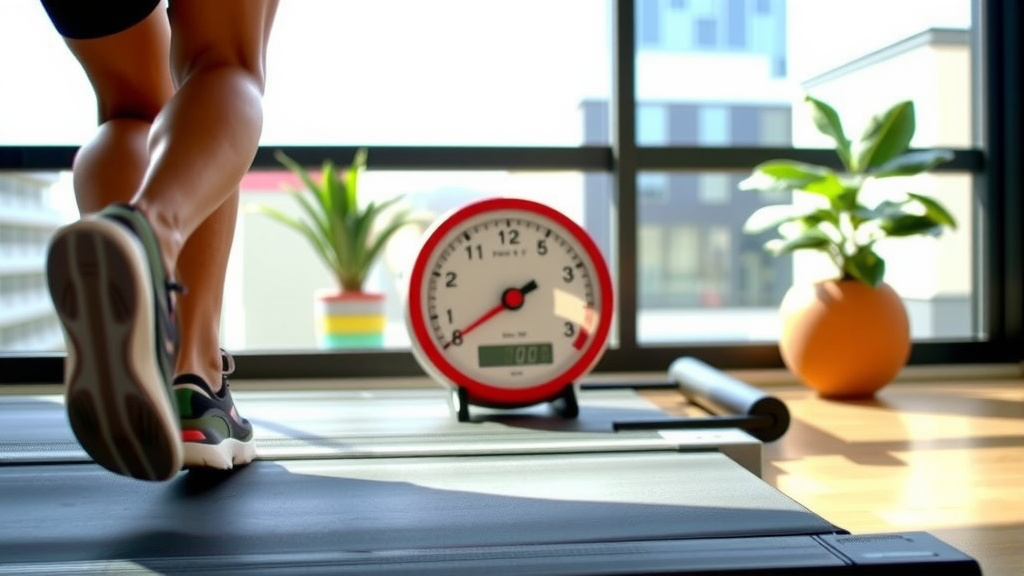
One common method involves using a stopwatch and a known distance. You can use a measured mile on a track or even a measured distance on a local road. Run that distance on your treadmill at a specific speed (e.g., 6 mph). Then, time how long it takes you to complete that distance. You can then use an online calculator to see what your actual speed was based on your time and distance. For instance, if you ran 1 mile in 10 minutes, your actual speed was 6 mph.
Using a GPS Device or App
Many fitness trackers and smartphone apps use GPS to measure your speed. While GPS isn’t always perfectly accurate indoors due to signal interference, it can give you a decent estimate. Run on your treadmill at a set speed and compare the reading on your GPS device to the treadmill’s console. This can help you identify a consistent difference. For example, your GPS might show 4.5 mph while the treadmill says 5 mph.
The Belt Speed Measurement Trick
You can also try to measure the belt speed directly. While the treadmill is running at a constant speed, mark a point on the belt. Then, use a stopwatch to time how long it takes for that mark to travel a known distance (e.g., 10 feet). You can then calculate the belt’s speed. This method requires a bit more effort but can be quite revealing.
What to Do About Inaccurate Treadmill Speeds
If you discover your treadmill is consistently showing a faster speed than reality, don’t panic. You can take steps to address it and ensure your workouts are effective.
Recalibrate Your Treadmill
Many treadmills have a calibration mode that you can access. This process tells the machine to re-learn its speed settings. The exact method varies by brand, so consult your treadmill’s manual or search online for instructions specific to your model. Sometimes, a simple recalibration can make a big difference.
Contact the Manufacturer or a Technician
If recalibration doesn’t solve the problem, or if your treadmill is still under warranty, you might need professional help. Contacting the manufacturer or a certified treadmill technician can help diagnose and fix the issue. They can check for worn parts or electronic problems affecting speed accuracy.
Adjust Your Training Based on Findings
Even if you can’t get your treadmill perfectly accurate, you can still train effectively. Simply note the typical difference. If your treadmill usually shows 1 mph faster than reality, and you want to run at 8 mph, set the treadmill to 9 mph. You’ll be getting a more accurate workout. Many guidelines suggest that consistency is key, so knowing your machine’s quirks allows for consistent training.
Consider Your Real-World Running
Remember that treadmill running is different from outdoor running. Even an accurate treadmill speed won’t perfectly replicate running on pavement or trails. Factors like wind resistance and terrain are absent. So, use your treadmill for its consistency and control, but don’t expect it to be an exact replica of your outdoor runs.
Tips for More Accurate Treadmill Workouts
To make sure your treadmill workouts are as effective as possible, here are a few quick tips:
- Check your manual for calibration instructions.
- Perform a manual speed check periodically.
- Note consistent discrepancies between treadmill and GPS speeds.
- Adjust your target speed based on your findings.
- Maintain your treadmill regularly for optimal performance.
- Don’t obsess over perfection; consistency is most important.
Conclusion
It’s clear that your treadmill’s speed display is a helpful guide, but not always a perfect measure. We found that most treadmills tend to overestimate your actual pace, impacting your perceived workout intensity and calorie burn. Understanding why this happens – from calibration drift to sensor precision – empowers you to get more from your training. Don’t let a few miles per hour difference derail your fitness goals. Take a moment this week to check your treadmill’s accuracy, make a note of any consistent differences, and adjust your settings accordingly. Your workouts will thank you!
Frequently Asked Questions
How often should I calibrate my treadmill?
Most experts suggest calibrating your treadmill at least once a year. You might also want to recalibrate if you notice a consistent discrepancy between your treadmill’s speed and a reliable GPS tracker, or if you’ve recently moved the machine.
Can a treadmill’s accuracy change over time?
Yes, treadmill accuracy can change as the machine ages and its components experience wear and tear. The motor, belt, and sensors can all lose their precision, leading to speed discrepancies. Regular maintenance can help slow this process.
Is GPS accuracy reliable for checking treadmill speed?
GPS can provide a decent estimate, but it’s not always perfectly accurate indoors due to signal interference. It’s best used as a comparison tool. If your GPS consistently shows a different speed than your treadmill, it’s a good indicator of an inaccuracy.
What’s the easiest way to test my treadmill’s speed?
The manual check method, using a stopwatch and a known distance, is one of the most straightforward ways. You can also use a fitness tracker or app that measures speed and compare its reading to your treadmill’s console while running at a steady pace.
Should I worry if my treadmill is consistently off by 0.5 mph?
You don’t need to worry excessively, but it’s good to be aware of it. Simply adjust your target speed. If your treadmill consistently reads 0.5 mph faster than reality, and you aim for 7 mph, simply set your treadmill to 7.5 mph for a more accurate workout intensity.