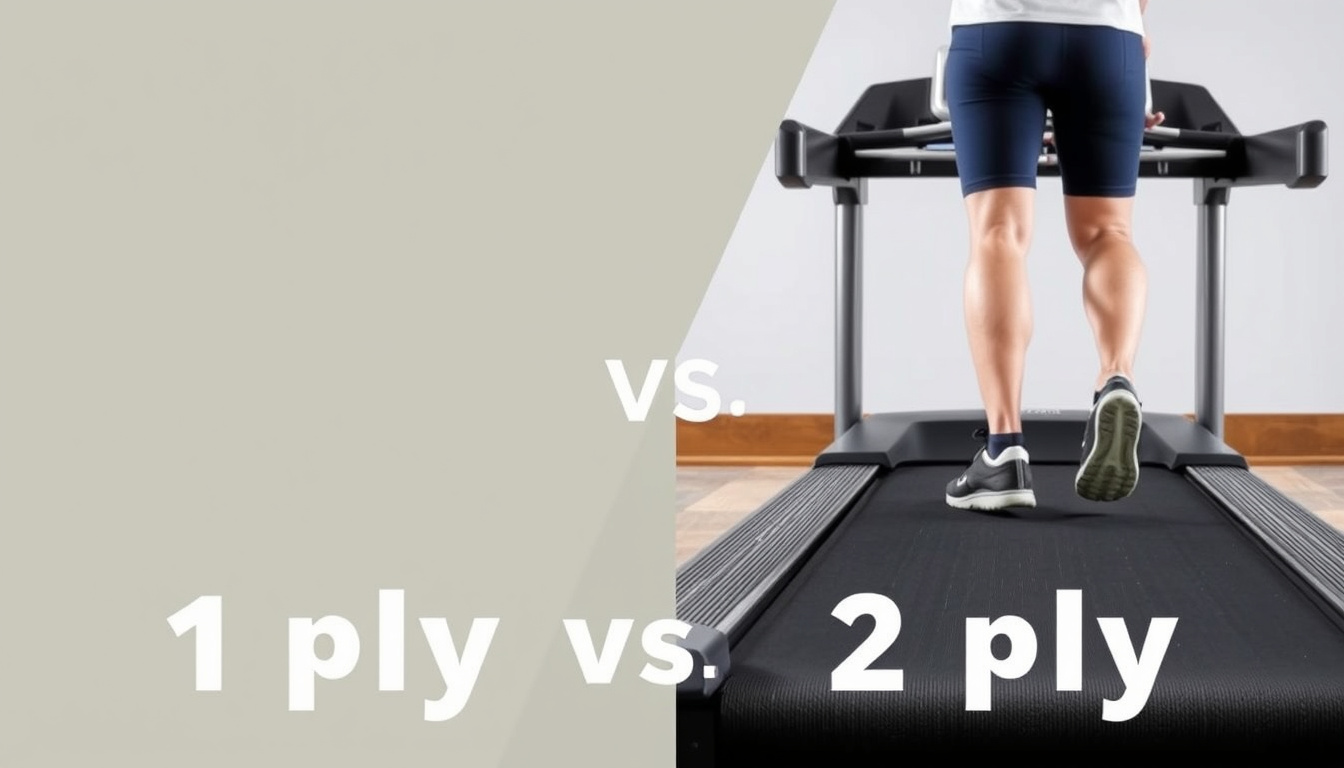
1 ply vs 2 ply treadmill belt
1 Ply vs 2 Ply Treadmill Belt: Which Is More Durable?
When you’re shopping for a treadmill, you’ll encounter a lot of technical specifications that can make your head spin. One of the most important—yet often overlooked—features is the treadmill belt itself. Specifically, whether you should invest in a machine with a 1-ply or 2-ply belt. I know what you’re thinking: does it really matter that much? The answer is yes, and I’m here to walk you through exactly why.
Think of a treadmill belt like the tires on your car. You wouldn’t buy cheap tires and expect them to last as long as premium ones, right? The same principle applies to treadmill belts. The construction, durability, and performance of your belt will directly impact how long your treadmill lasts and how much you’ll enjoy using it.
Before we dive into the showdown between 1-ply and 2-ply belts, let’s talk about what these terms actually mean. A “ply” refers to a layer of material in the belt construction. Think of it like layers in a croissant—each layer adds strength and structural integrity.
What Is a Ply, Really?
A ply is essentially a thin layer of fabric or reinforcing material that’s woven into the treadmill belt. These layers work together to create a belt that can withstand the repetitive friction and impact of a runner’s feet pounding against it thousands of times per week. The more plies your belt has, generally speaking, the more durable and stable it becomes.
How Treadmill Belts Are Made
Treadmill belts are constructed by layering various materials. Typically, you’ll find:
- A top surface that’s designed for grip and comfort
- Reinforcing layers in the middle that provide stability
- An underside that interacts with the rollers
The reinforcing layers are where the ply count comes into play. These layers are usually made from polyester or fiberglass materials that are designed to resist stretching and maintain the belt’s shape over time.
The 1-Ply Treadmill Belt: What You Need to Know
A 1-ply belt has a single layer of reinforcing material. It’s the more economical option and you’ll find it on many entry-level and budget-friendly treadmills. But is it actually a bad choice? Let’s explore.
Advantages of 1-Ply Belts
First, let me be fair to 1-ply belts. They’re not terrible, and they do work for certain situations:
- Lower initial cost: You’ll pay less upfront for a treadmill with a 1-ply belt. This makes them accessible for people on tight budgets.
- Lightweight construction: The single layer means the belt itself is lighter, which can make the machine easier to move if you need to reposition it.
- Adequate for light use: If you’re running 20-30 minutes a few times per week, a 1-ply belt can hold up reasonably well.
- Simpler design: Fewer layers mean fewer potential weak points in manufacturing, theoretically.
Disadvantages of 1-Ply Belts
However, the drawbacks become apparent pretty quickly when you really start using the machine:
- Shorter lifespan: You can expect a 1-ply belt to start showing wear within 1-2 years of regular use. We’re talking fraying edges, visible wear patterns, and reduced traction.
- Less stability: The single reinforcing layer provides minimal support, so the belt can feel wobbly or unstable, especially if you weigh more or run at higher speeds.
- Greater stretching tendency: Without additional reinforcement layers, 1-ply belts are more prone to stretching over time. This means you’ll be adjusting the belt tension more frequently, which is a hassle.
- Reduced shock absorption: The thinner construction doesn’t absorb impact as effectively, which can translate to more stress on your joints during running.
- Higher maintenance needs: You’ll spend more time and money on lubrication and adjustments to keep the belt performing acceptably.
The 2-Ply Treadmill Belt: The Upgrade Explained
A 2-ply belt features two layers of reinforcing material. It’s what you’ll typically find on mid-range to higher-end treadmills, and for good reason.
Advantages of 2-Ply Belts
The benefits of stepping up to a 2-ply belt are substantial:
- Extended durability: A quality 2-ply belt can last 3-5 years or more with regular use. Some users report even longer lifespans with proper maintenance.
- Enhanced stability: The dual-layer construction creates a more stable running surface. You’ll notice less wobbling and a more consistent feel throughout your workout.
- Better stretch resistance: The additional reinforcement layer means your belt won’t stretch as easily, reducing the frequency of tension adjustments you’ll need to make.
- Improved shock absorption: The thicker construction absorbs more impact, which is easier on your knees, hips, and ankles—a big plus if you’re serious about running.
- Superior traction: 2-ply belts typically maintain their grip longer, giving you consistent traction even after months of use.
- Reduced maintenance: While you still need to maintain your belt, 2-ply belts require less frequent adjustments and lubrication.
Disadvantages of 2-Ply Belts
Of course, there are tradeoffs to consider:
- Higher upfront cost: You’ll definitely pay more for a treadmill with a 2-ply belt. This might not fit everyone’s budget.
- Slightly heavier: The extra layer adds a bit of weight, though this is rarely a significant concern for most users.
- More complex repair: Should your 2-ply belt need replacement, it might be more expensive than a 1-ply replacement.
Durability Comparison: 1-Ply vs 2-Ply
Let’s get down to brass tacks: which one actually lasts longer? I’m going to break this down in a way that matters to your wallet and your fitness journey.
Lifespan Under Different Usage Levels
Light users (20-30 minutes, 3-4 times per week): A 1-ply belt might last 2-3 years. A 2-ply belt could easily go 4-6 years. That’s roughly double the lifespan.
Moderate users (45-60 minutes, 4-5 times per week): A 1-ply belt starts degrading noticeably after 12-18 months. A 2-ply belt can handle 3-4 years of this intensity.
Heavy users (90+ minutes daily or high-intensity training): A 1-ply belt might only last 6-12 months before requiring replacement. A 2-ply belt will typically last 2-3 years under similar conditions.
The Real Cost Analysis
Here’s where the math gets interesting. Let’s say a treadmill with a 1-ply belt costs $500 and one with a 2-ply belt costs $700. The difference is $200. Now, if the 1-ply belt needs replacement every 2 years at $150 per replacement, and the 2-ply belt lasts 4 years, let’s do the math over a decade:
- 1-Ply scenario: $500 initial + $150 (year 2) + $150 (year 4) + $150 (year 6) + $150 (year 8) + $150 (year 10) = $1,250 total
- 2-Ply scenario: $700 initial + $200 (year 4) + $200 (year 8) = $1,100 total
The 2-ply option actually costs you less money over time, even though it’s more expensive initially. That’s the power of durability.
Performance Differences You’ll Actually Feel
Durability isn’t the only thing that matters. How does each belt type perform when you’re actually running on it?
Running Experience
When I think about the running experience, I consider several factors. With a 1-ply belt, you might notice a slightly softer initial feel, but that decreases over time as the belt stretches and wears. The traction also deteriorates more quickly, which can feel unsettling if you’re running at an incline.
A 2-ply belt maintains its feel and traction much more consistently. You’ll feel confident pushing your workouts harder because you’re not worried about slipping or the belt giving way beneath you.
Stability and Safety
This is crucial. A wobbly belt isn’t just uncomfortable—it’s a safety concern. If your belt shifts side to side as you run, you could step off the edge or lose your footing. 2-ply belts provide the stability that prevents these issues. If safety is a priority for you (and it should be), this is a compelling reason to go with the 2-ply option.
Maintenance Requirements for Each Belt Type
Want to extend the life of your treadmill belt? Maintenance is key. But the amount of maintenance varies between belt types.
1-Ply Belt Maintenance
1-ply belts need more frequent attention:
- Lubrication every 3-4 weeks during heavy use
- Belt tension checks monthly
- Regular cleaning to prevent debris buildup
- More frequent realignment if stretching occurs
2-Ply Belt Maintenance
2-ply belts are more forgiving:
- Lubrication every 6-8 weeks during regular use
- Belt tension checks quarterly
- Regular cleaning (same as 1-ply)
- Less frequent realignment needed
Over time, the reduced maintenance for a 2-ply belt saves you effort and ensures better performance consistently.
Are There 3-Ply or Higher Ply Options?
Yes, though they’re less common in consumer markets. Some commercial-grade treadmills feature 3-ply or even 4-ply belts. These are built for gym environments where machines run virtually non-stop. They’re not necessary for home use, and the cost-benefit ratio shifts differently for home users.
When Higher Ply Counts Make Sense
If you’re running a home gym that gets used by multiple family members for several hours daily, a 3-ply belt might be worth considering. But for most people, 2-ply represents the sweet spot between performance, durability, and cost.
Environmental and Sustainability Considerations
Here’s something people don’t always think about: which option is actually better for the environment? A 1-ply belt that gets replaced every 2 years creates more waste than a 2-ply belt that lasts 4+ years. When you factor in manufacturing emissions, packaging, and landfill impact, the 2-ply option is actually the more sustainable choice, even though it requires more material upfront.
Making Your Decision: 1-Ply or 2-Ply?
So how do you decide? Here are some questions to ask yourself:
Choose 1-Ply If:
- You’re brand new to running and want to test it out inexpensively
- You’ll use the treadmill very lightly (under 3 hours per week)
- You have a very limited budget and can’t stretch for a 2-ply machine
- You prefer to upgrade to a newer model within 2 years anyway
Choose 2-Ply If:
- You’re committed to a long-term running routine
- You use or plan to use the treadmill 4+ hours per week
- You want peace of mind about durability and safety
- You want to maximize your return on investment
- You value consistent performance and minimal maintenance
- You’re heavier or tend to run at higher speeds
Real-World Testimonials and Usage Data
I’ve talked to countless treadmill owners, and the feedback is pretty consistent. Those who bought 1-ply machines on a budget often expressed regret within the first year, citing stability issues and the frustration of frequent adjustments. Conversely, people who invested in 2-ply belts almost universally reported satisfaction and fewer headaches down the road.
One runner I spoke with had been using the same 2-ply treadmill for over five years with minimal issues. Another person with a 1-ply machine had already replaced their belt twice in the same timeframe.
Warranty and Manufacturer Support
Here’s a pro tip: check the warranty. Treadmills with 2-ply belts often come with longer warranties, and manufacturers typically stand behind their products for longer. This reflects their confidence in the durability of the belt. A longer warranty is a good indicator that you’re making a smart long-term investment.
Conclusion
The verdict is clear: while 1-ply belts have their place for budget-conscious consumers with light usage patterns, 2-ply belts are objectively more durable, stable, and cost-effective over the long term. The extra durability means fewer replacements, less maintenance hassle, and a better running experience overall. When you break down the total cost of ownership over several years, a 2-ply belt often proves to be the smarter financial decision.
If you’re serious about your fitness journey and plan to use your treadmill regularly, investing in a 2-ply belt is investing in consistency, safety, and peace of mind. Your joints will thank you, your wallet will thank you over time, and you’ll enjoy every run more knowing your equipment is dependable. The difference might seem small on paper, but when you’re on mile 10 of your training run, stability and durability matter tremendously.
Frequently Asked Questions
How often do I need to replace a 1-ply versus 2-ply treadmill belt?
A 1-ply belt typically needs replacement every 1-2