Running Outside vs Treadmill: What to Know
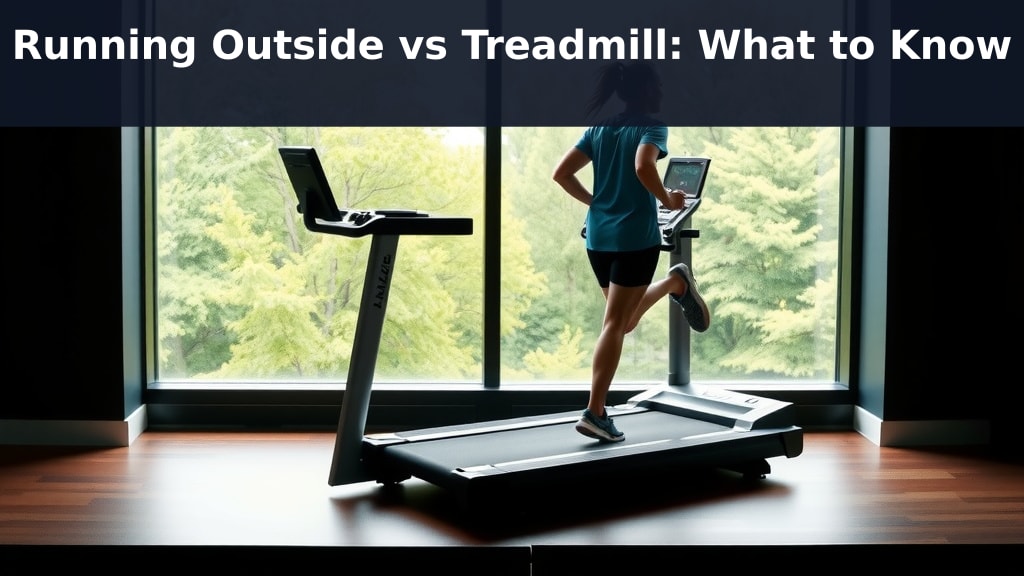
Deciding between running outside and using a treadmill often comes down to your personal goals and preferences. Both offer great cardiovascular benefits, but they impact your body and experience differently. For a more natural stride and calorie burn, running outside is often preferred, while a treadmill provides a controlled environment for consistency.
Many runners wonder about the true differences and which is “better.” We found that while both burn calories and improve fitness, outdoor running can engage more stabilizing muscles due to uneven terrain. Treadmills, on the other hand, can be easier on your joints and allow for precise control over speed and incline, which is great for specific training plans.
- Outdoor running offers a more natural experience and works more muscles.
- Treadmills provide control and are often easier on joints.
- Both are excellent for cardiovascular health and calorie burning.
- Your personal goals will determine the best choice for you.
Let’s break down what you need to know about hitting the pavement versus the belt so you can make the best choice for your fitness journey.
Hitting the Pavement or the Belt: Which Run is Right for You?
Deciding where to run can feel like a big choice. You want to get the most out of your workout. Both outdoor running and treadmill running offer excellent ways to boost your fitness. We’ve looked into the details to help you choose the path that best suits your stride. Think of it like choosing between a scenic hike and a controlled gym workout. Both get you moving, but the experience differs.
The Great Outdoors: Nature’s Gym
Running outside connects you with your surroundings. You feel the wind, see the sights, and hear the sounds. This connection can make your run feel less like a chore and more like an adventure. Many runners find that the varied terrain challenges their bodies in unique ways. Your stabilizing muscles work harder to keep you upright on uneven surfaces. This can lead to a more well-rounded workout.
Pros of Outdoor Running
- Variety is the spice of life: Every run is different. You encounter hills, turns, and changing weather. This keeps things interesting and prevents boredom.
- Mental boost: Being in nature is proven to reduce stress and improve mood. Think of it as a moving meditation.
- Real-world conditioning: You train for the actual world. You’ll be better prepared for races or runs on varied paths.
- Cost-effective: Once you have shoes, the “gym” is free! No membership fees are needed.
- More muscle engagement: Research suggests that outdoor running can activate more muscles, especially those used for balance and stabilization (National Strength and Conditioning Association).
Cons of Outdoor Running
- Weather dependency: Rain, snow, or extreme heat can ruin your planned outdoor run.
- Safety concerns: Uneven sidewalks, traffic, and nighttime visibility can pose risks. You need to be more aware of your surroundings.
- Pacing challenges: It’s harder to maintain a consistent pace outdoors. Hills and wind resistance naturally slow you down.
- Pollution and allergens: You might be exposed to car exhaust or pollen, which can affect your breathing.
The Treadmill: Your Controlled Running Space
A treadmill offers a predictable and controlled environment. You step onto the belt and dictate the pace and incline. This makes it a fantastic tool for specific training goals or when outdoor conditions aren’t ideal. Many people find treadmills gentler on their joints. This is because the belt provides some cushioning with each stride.
Pros of Treadmill Running
- Predictable conditions: You control the speed and incline precisely. This is perfect for interval training or hitting specific targets.
- Joint-friendly: The cushioned deck can reduce impact on your knees and ankles. This is a big plus for those with joint issues or recovering from injury (American Academy of Orthopaedic Surgeons).
- Convenience: You can run anytime, regardless of the weather or time of day. No need to worry about safety in the dark.
- Easy tracking: Most treadmills display distance, time, speed, and calories burned. This makes monitoring your progress simple.
- No external forces: You don’t battle wind resistance or uneven surfaces. This allows for a consistent effort.
Cons of Treadmill Running
- Boredom potential: Staring at a wall can get monotonous for some. It lacks the mental engagement of outdoor scenery.
- Less natural stride: The moving belt can alter your natural gait slightly. You might not engage all your stabilizing muscles as much.
- Cost: Treadmills can be expensive to purchase. Gym memberships also add up over time.
- Overheating: Without a natural breeze, treadmills can feel hotter. You might sweat more intensely.
Calorie Burn and Performance: A Closer Look
When comparing calorie burn, it’s not always a straightforward answer. Many factors influence how many calories you torch during a run. This includes your weight, speed, and the intensity of your effort. However, research generally shows that for the same speed and duration, outdoor running might burn slightly more calories.
This is because outdoor running requires you to overcome wind resistance and propel yourself forward more actively. You also engage more stabilizing muscles to handle uneven terrain. A treadmill belt does some of the work for you, essentially pulling your leg back. We found that setting the treadmill incline to 1-2% can help mimic the effort of running outdoors more closely (Mayo Clinic).
| Feature | Outdoor Running | Treadmill Running |
|---|---|---|
| Environment | Variable (weather, terrain) | Controlled (speed, incline) |
| Muscle Engagement | Higher (stabilizers) | Lower (can be increased with incline) |
| Joint Impact | Higher (variable surfaces) | Lower (cushioned deck) |
| Calorie Burn (approx.) | Slightly Higher (due to effort) | Slightly Lower (can increase with incline) |
| Mental Stimulation | High (scenery, variety) | Low (can be boring) |
| Convenience | Weather dependent, safety concerns | Anytime, anywhere |
Making Your Choice: What’s Your Goal?
The best running environment depends entirely on you. Are you training for a specific race with varied terrain? You’ll benefit from lots of outdoor running. Do you need a low-impact workout to protect your joints? The treadmill might be your best friend. Maybe you just need a reliable way to get your miles in, no matter the weather.
Consider These Questions:
- What are your fitness goals? (e.g., weight loss, race training, general health)
- What is your current fitness level?
- Do you have any joint pain or injuries?
- What are the weather conditions like where you live?
- Do you prefer variety or predictability in your workouts?
- What is your budget for fitness?
Many experts suggest a blend of both. You can enjoy the benefits of outdoor running when conditions are good. Then, hop on the treadmill when you need consistency or protection from the elements. Listen to your body. It will tell you what feels right and what helps you progress the most. Your running journey is personal, and so is the path you choose.
Quick Checklist for Your Running Decision
- Evaluate your personal fitness goals.
- Check the weather forecast before heading out.
- Consider setting your treadmill to an incline.
- Listen to your body for joint comfort.
- Mix up your runs for maximum benefit.
- Enjoy the process of getting fit!
Conclusion
You’ve learned that both running outside and using a treadmill offer fantastic fitness benefits. Outdoor runs provide a mental boost and engage more muscles, while treadmills offer control and joint support. We found that the best choice really depends on your personal goals, current fitness level, and preferences. Don’t be afraid to mix both into your routine. Consider using the treadmill for structured workouts or bad weather days. Then, head outside to enjoy nature and varied terrain when you can. Your running journey is unique, so choose the path that keeps you moving forward happily.
Frequently Asked Questions
Is one better for weight loss?
Research suggests that outdoor running might burn slightly more calories due to wind resistance and uneven terrain. However, both activities are excellent for calorie expenditure. On a treadmill, increasing the incline to 1-2% can help match the outdoor calorie burn. Consistency is key for weight loss, so choose the option you’ll stick with.
Can I train for a marathon on a treadmill?
Yes, you can train for a marathon on a treadmill, especially for building mileage and doing speed work. However, many experts recommend incorporating outdoor runs to prepare your body for varied surfaces and race-day conditions. You’ll want to get used to real-world terrain before your big event.
Which is easier on your knees?
Treadmills are often considered easier on the knees and joints. The cushioned deck can absorb more impact with each stride compared to harder outdoor surfaces like pavement. If you have knee pain or are recovering from an injury, a treadmill might be a gentler option.
Does outdoor running really work more muscles?
Yes, outdoor running generally engages more muscles, particularly those used for balance and stabilization. Your body constantly adjusts to uneven surfaces, inclines, and declines. This dynamic movement strengthens smaller stabilizing muscles that might not be as active on a flat, consistent treadmill belt.
How can I make treadmill running less boring?
You can combat treadmill boredom by changing up your routine. Try interval training with varying speeds and inclines. Listen to engaging podcasts or audiobooks, or watch your favorite shows. Some treadmills also offer virtual running courses that can add visual interest to your workout.